

I believe these fires are being set purposely during wind events for a myriad of reasons, and I had a post that showed just how large an area was affected in Nebraska. Consequently, one angle is to impact cattle ranches and reduce the number of cattle, which is down to levels last seen in the 60’s. After COVID, a lot of rail feed deliveries were reduced by 20% due to staffing, which sent a lot of cattle to slaughter, which will probably happen here as the feed expense will be too great for some smaller family ranch operations. Another angle is fire insurance, as people in rural areas are being heavily squeezed by insurance expenses. Here in Wyoming, fire insurance if you’re more than 5 miles away from a fire station tripled. California, the home of arson fires, have had a big impact on rising insurance rates. If this leads to a lot of cattle harvesting, we’ll see a temporary decrease in beef prices, so fill up the freezer.
https://cowboystatedaily.com/2026/03/18/tens-of-thousands-of-cattle-displaced-in-nebraska-wildfires/
With 750,000+ acres of agricultural land destroyed by wildfire, Nebraska ranchers are facing tough decisions about where to graze their cattle. Jim Magagna, of the Wyoming Stockgrowers, says as Wyoming is also in a drought, can’t offer much pasture.
By Kate Meadows
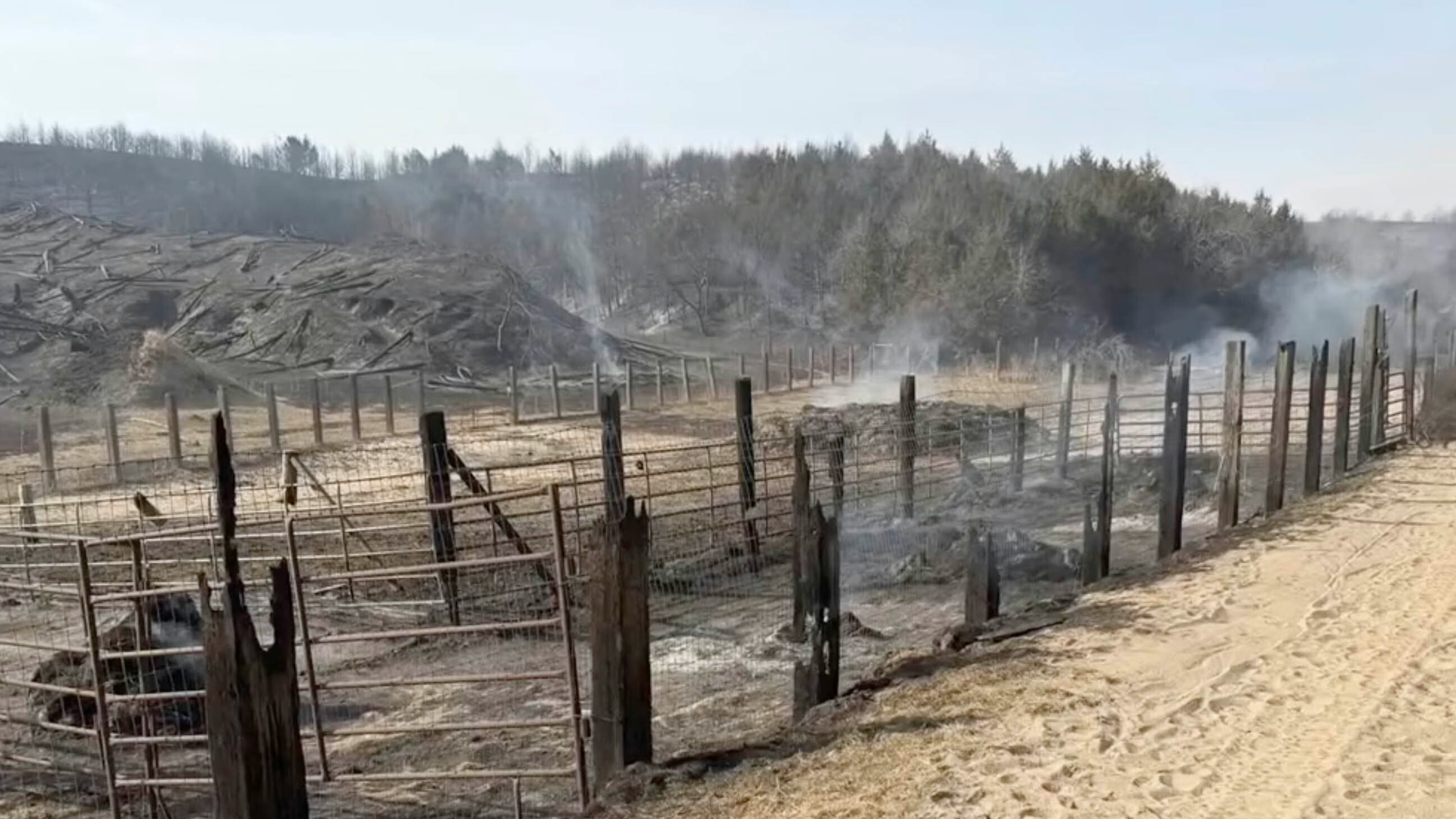
An estimated 35,000-40,000 cattle are displaced due to wildfires in Nebraska that have ravaged more than 750,000 acres of land.
Virtually all of the land that has been destroyed is agricultural land, leaving many ranchers and cattle operations facing tough and urgent decisions.
“I would say all of it is grazing land, 99% of it for sure,” Craig Uden, president of Nebraska Cattlemen, a group that represents the interests of the state’s beef and cattle producers, told Cowboy State Daily.
Uden was on his way to a meeting with Nebraska Gov. Jim Pillen when he took Cowboy State Daily’s call Wednesday.
“Everybody’s just trying to operate right now,” he said. “People are just basically trying to feed the cattle they have and get through the day-to-day.”
Nebraska Cattlemen has set up a disaster relief page on its website to assist Nebraska ranchers with resources in the fires’ aftermath.
Jim Magagna, executive vice president of the Wyoming Stock Growers Association, said he hopes Wyomingites will help their Nebraska neighbors as they are able.
However, he said, Wyoming is in its own drought which leaves good pastureland at a premium.
“We will be encouraging our people to be helpful in any way we can,” said Magagna.
The Lay Of The Land
Multiple wildfires continue to burn across western and north-central Nebraska. The Morrill Fire, one of four wildfires raging in the state, has scorched more than 572,000 acres, making it the largest wildfire in Nebraska history and among the 30 largest in United States history.
According to wildfire.gov, neither the Cottonwood nor Morrill fires grew notably beyond their current perimeters Wednesday, despite Tuesday’s strong winds.
But for many ranchers, the damage is already done.
“They’re all out of feed. They’ve lost fences,” Uden said.
While tens of thousands of cattle have been displaced due to the fires, Uden said he hasn’t heard much yet on cattle deaths that have resulted from the fires.
“But you don’t know,” he said. “Smoke has a lingering effect.”
Jason Christensen, owner of Crusty’s Feed Store in Arthur, Nebraska, said cattle has been lost in the Morrill Fire.
“There is loss, yes,” he told Cowboy State Daily.
While he didn’t have official numbers, he said that, having talked to area ranchers he would guess about 500 cattle in and around Arthur County, Nebraska, have died.
“It should have been thousands upon thousands,” he said.
Hanging On Day-To-Day
Dan Powers, an employee at Crusty’s Feed Store, was getting ready to unload some donated fence posts Wednesday. The feed store is listed as a resource on the Nebraska Cattlemen Disaster Relief Site.
“It’s been wild,” Powers told Cowboy State Daily. “We’re having feed dropped off, fence posts, everything. It’s coming from every direction, from eastern Nebraska to Montana.”
Christensen, who is also assistant fire chief of Arthur County, said the store has been fielding phone calls from as far away as Illinois and Tennessee. Some callers want to donate hay or supplies. Others offer to haul the supplies.
“It’s amazing, the heart of the people in the Midwest,” he said.
He called all the people stepping up to help a “blessing in disguise.”
Christensen said he has put one employee in charge of coordinating delivery efforts to ranches from the feed store. Truckers from all over have offered to haul hay to ranches in need, he said. But sometimes, even getting to those ranches can be a challenge, especially for truck drivers who are not familiar with the area.
“It’s working out,” he told Cowboy State Daily, “because people in the area know the county and they are helping direct trucks where to go.”
Powers said the feed store was trying to send most of the hay directly to the ranches, both to eliminate extra touch points and to keep space on the feed store property open and available for donations that don’t have immediate homes.
Some of the store’s customers have lost up to 16,000 acres of pastureland, Christensen said.
“The magnitude is crazy,” he said.
Pillen has signed an executive order waiving hours-of-service requirements and easing weight and size restrictions for trucks hauling feed, hay and other emergency supplies.
Where Will The Displaced Cattle Go?
According to the Nebraska Cattlemen Disaster Relief page, the most common needs ranchers are facing are monetary donations, hay, fence posts and temporary pastureland.
“Certainly, those Nebraska producers are going to be looking for locations for where to put their cattle,” said Magagna.
While “Wyoming certainly can be helpful,” Magagna said Wyoming is facing its own drought conditions that make additional forage in the state limited.
Mark Eisele, a Cheyenne-area rancher and former president of the National Cattlemen’s Beef Association, agreed.
“The implication for Wyoming is, we’re already hurting for grass,” he said.
Magagna said another option for producers is to purchase significant amounts of hay for feeding.
But it’s an opportunity that comes with a big cost, he said.
Both he and Uden said they expected some ranchers will decide to sell off their livestock to reduce numbers.
How To Help
Nebraska Cattlemen is working to connect those in need with available pasture and other resources. The disaster relief page on its website allows people to donate money, offer to haul and deliver hay and offer pastureland.
“Virtually all of Nebraska is in some kind of a drought,” Uden said. “A lot of these (Nebraska) acres are already committed.”
Magagna said the same was true of Wyoming.
If people have grassland or availability to take some cows, they can advertise land on the website.
The Wyoming Stock Growers Association set up a wildfire relief fund several years ago, which provided significant financial relief to Wyoming ranchers whose land and livestock had been heavily impacted by wildfires. There was some money left in that fund, Magagna said.
“As we speak, I’m looking at making a contribution to the Nebraska Cattlemen’s disaster relief,” he said.
Rebuilding, Regenerating
As ranchers begin to pick up the pieces, they will also be waiting on Mother Nature to rebuild, Uden said, adding it will take a year or two for many of the ranches to recover, if they recover at all.
“This isn’t something anyone’s going to recover from in the next six months,” he said.
Adding to the challenge, water access is critical — and water is in short supply.
The Cottonwood and Morrill fires represent two diverse ecosystems. Uden said he expected land destroyed by the Cottonwood Fire to regenerate more quickly than that of the Morrill Fire, which is the largest wildfire in Nebraska’s history.
“If we can ever get any moisture at Cottonwood, that land will come back in the short-term,” Uden said.
The Morrill Fire tore through the Nebraska sandhills — a region of stabilized, grass-covered sand dunes. A combination of high wind and raging heat blew the sand away and fire torched what was underneath.
“That will take a longer period of time to heal,” he said.
Christensen, who owns Crusty’s Feed Store, is trying to count blessings instead of losses.
“God has definitely blessed this part of the country,” he said, emphasizing how remarkable it is that more cattle have not died in the blazes. “Now, we pray for rain — or a foot of snow.”
The Nebraska Extension will host a webinar on March 23 to help cattle producers make forage decisions in the aftermath of the fires.