

If you’ve read some of my posts, I don’t like or trust white coats. They can do well with some mechanical fixes to assist your body with healing itself, but a lot of things they do is harmful, like cutting out things you need with consequences or prescribing pharmaceutical poisons that will destroy your organs… And putting foreign matter in your body like electronics, batteries and metals will lead to autoimmune issues. But the interesting thing to realize is the financial incentive these medical megacorps have added, and how the unethical white coats go for that money with no regard for their patient, not even informing them of what they’ll implant in their body.
That’s where the story takes an ominous turn. Both Medicare and private insurers reimburse medical professionals for reviewing data collected by connected medical devices, a practice known as “remote patient monitoring.”
According to KFF, Medicare paid medical providers $536 million for remote patient monitoring in 2024, more than double what it paid three years earlier.
Worth pointing out these joint replacements are a hustle and only last a few years needing to be redone, but can do you real harm. I’d try supplementing your diet and exercise so your body can heal itself.
By Kyle Becker
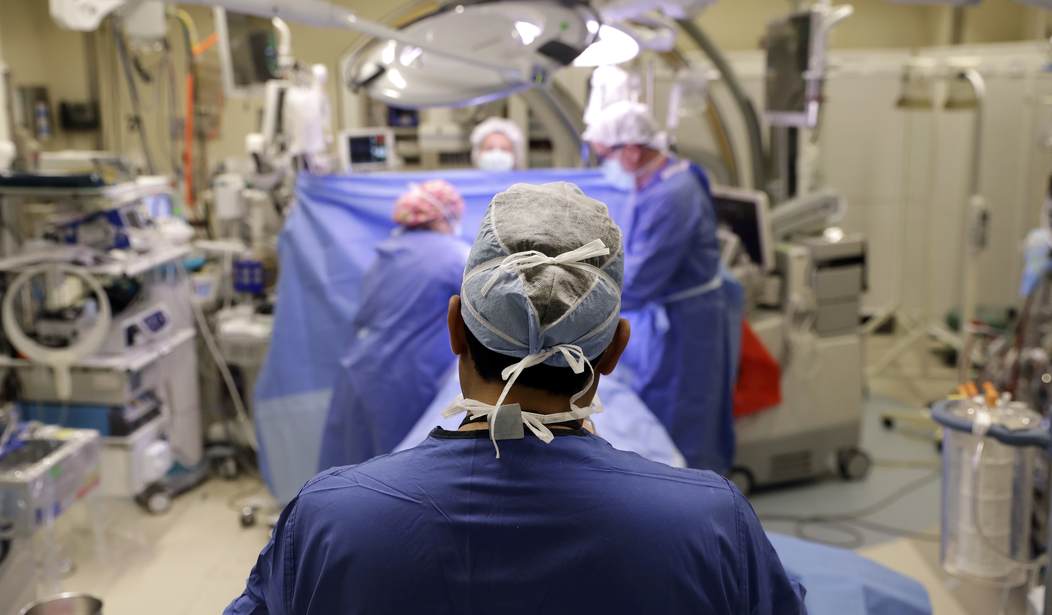
When Steve Russak went in for knee replacement surgery last year, the 70-year-old California man figured he knew what to expect.
What he didn’t expect was to start getting text messages from the company that manufactured his new knee.
Russak, a resident of Santa Rosa Valley, received the first text message upon waking up from surgery. Over the next several days, the messages kept coming. The company, Zimmer Biomet, wanted him to download an app and activate an account.
Russak had no idea why.
Finally, after receiving four such text messages, Russak got a phone call from a company representative offering to help him set up some accessories.
“I said, ‘What? I don’t know what you’re talking about,’” Russak told KFF Health News.
What Russak subsequently discovered was that his new knee came with some features that he says nobody had bothered to tell him about.
Implanted inside his body was a lithium-ion battery, a collection of sensors, and a transmitter capable of relaying information about his physical movements to medical professionals and the company that manufactured the device.
Russak had received what is known as a “smart knee.”
The artificial joint, called the Persona IQ, can collect information about a patient’s gait, range of motion, and other aspects of physical activity.
“Every step you take, they know every step you take,” Russak said.
Needless to say, Russak wasn’t particularly enthusiastic about his introduction to this new frontier in medical technology.
He is now suing his doctor, Zimmer Biomet, and Canary Medical, the technology company that helped develop the device, over what his lawsuit describes as an “unauthorized implantation.”
His complaint includes allegations of medical battery, negligence, and lack of informed consent.
Russak has declined to activate the device’s data transmission capabilities. But that doesn’t resolve all of his problems. He told KFF that he recently ran into difficulties getting an MRI because of compatibility issues with his new knee.
And apparently, he’s not the only person in California who says they received a smart knee without asking for one.
Another patient, Jodi Murphy, has filed a similar lawsuit against her physician and the two medical technology companies, alleging that they acted “without disclosing this device or obtaining Plaintiff’s specific informed consent for its use.”
Both companies have denied the allegations in Russak’s complaint.
“As device manufacturers, we do not practice medicine and do not interfere with the physician-patient relationship, including matters of professional judgment or private discussions regarding patient consent,” a Zimmer Biomet spokesperson told the Daily Caller.
The company also emphasized that the transmission of postoperative recovery data requires patient authorization.
But why are these devices being implanted in the first place? And how much of an improvement are they over conventional knee replacements?
That’s where the story takes an ominous turn. Both Medicare and private insurers reimburse medical professionals for reviewing data collected by connected medical devices, a practice known as “remote patient monitoring.”
According to KFF, Medicare paid medical providers $536 million for remote patient monitoring in 2024, more than double what it paid three years earlier.
The Department of Health and Human Services’ Office of Inspector General has also raised concerns about the potential for fraud, finding that approximately 43 percent of patients receiving remote monitoring in 2024 did not receive all components of the service.
Meanwhile, Zimmer Biomet’s own literature acknowledges that the data generated by its smart knee are “not intended to support clinical decision-making” and have “not been shown to provide any clinical benefit.”
Dr. Kevin Bozic, an orthopedic surgeon at the University of Texas at Austin, characterized the technology as “a nice-to-have, certainly not a need-to-have.”
“It’s overkill to have it in the knee,” he told KFF.
So, we have a reimbursement system that financially incentivizes the adoption of medical technology whose additional clinical benefits aren’t always clear.
As I discussed recently at RedState, some of the more peculiar financial incentives in American medicine help explain why our healthcare costs keep going up. But the more compelling aspect of Russak’s lawsuit concerns what medical technology might eventually mean for our individual autonomy.
Consider the implications of these devices in a country that adopts a single-payer healthcare system, something Democrats are once again actively discussing, as my RedState colleague Nick Arama has reported.
Could the government eventually make consent to remote monitoring a condition of paying for certain medical procedures? Could it make determinations about future medical coverage based on information transmitted by devices implanted inside patients?
There is already a precedent of sorts. As KFF noted, a 2018 ProPublica investigation found that insurers were monitoring patients’ use of CPAP machines and, in certain instances, denying coverage for replacement supplies based on the data.
These are ethical issues worth sorting out as this technology becomes increasingly commonplace. Unfortunately, it looks like the medical industry has already proceeded with an approach of “do it first, ask questions later.”
Don’t make the same mistake, should you or a loved one need surgery. Demand to know if your implant is a “smart one.” Otherwise, you could wind up feeling like a dummy.