

This is a whole new OS base that is custom, and Andy has done something similar to ChromeOS with having two OS partitions, separate from the data partition, so one can receive a new image and switch over if successful, and you can switch back to the old one. I tried this, but it was pretty buggy and I had to revert to the original channel. And being able to SSH into the machine is super buggy and hangs, so pretty unable at the moment if you like to SSH in. Looks like this may have something to do with replacing OpenSSH with Dropbear. [Fixed with latest image]
After getting SSH working and getting GNU Screen to run. I edited the /etc/passwd file to change my shell to Fish. The package manager is apk and you use add to install software.
sudo apk add screen fastfetch btop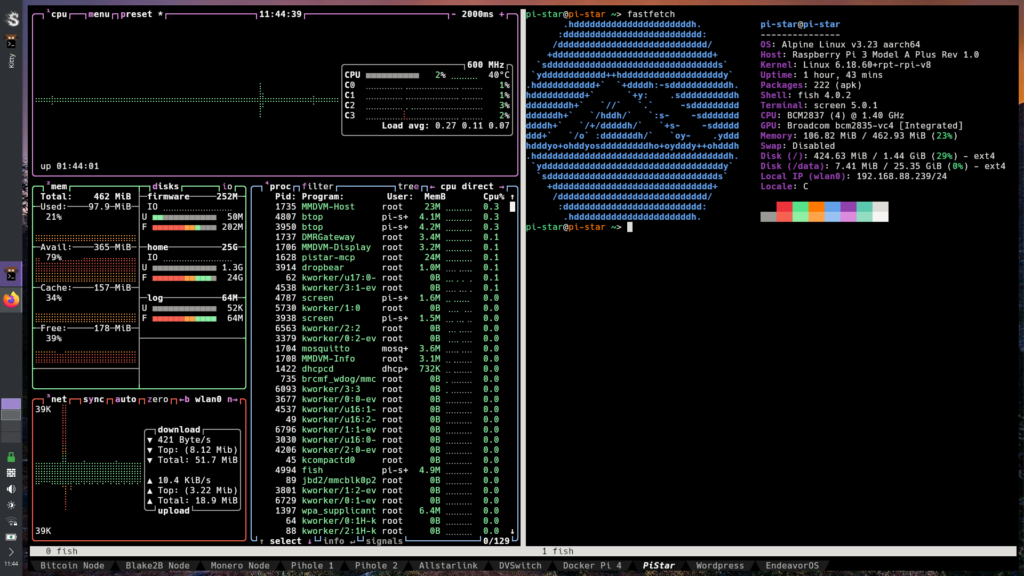
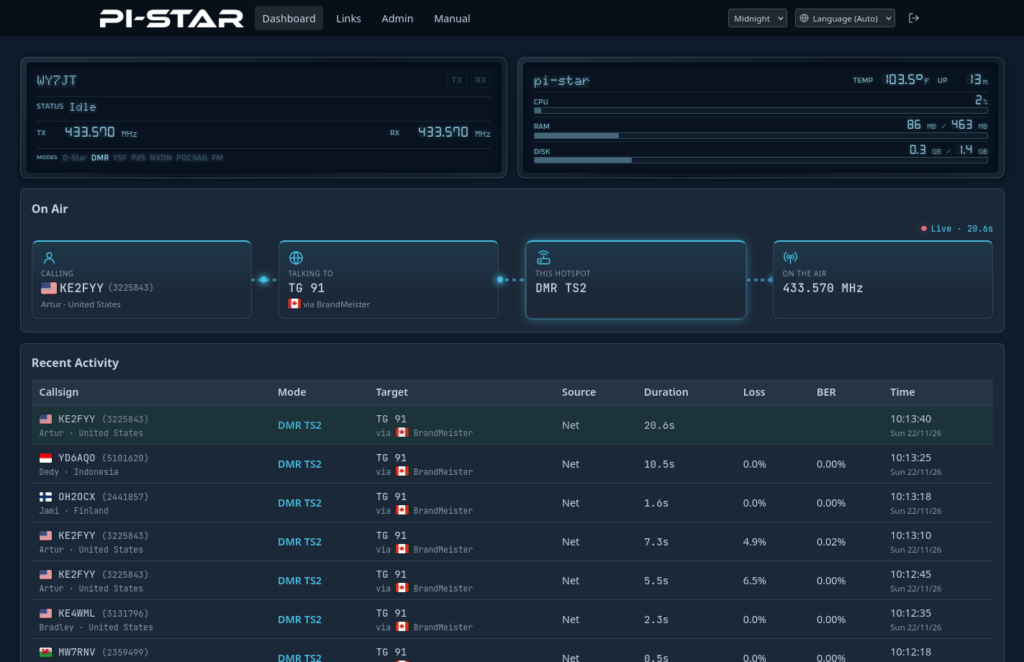
The new web interface is browser side heavier when there is activity, but not too bad and pretty responsive when jumping around configuration options or editing files. The Link Manager is really good and easy to add and drop talk groups.
I’m kind of a more hands on user as I updated and compiled the underlying modules from Jonathan myself, had scripts for switching between different versions of DMRGateway, one that had only one network active allowing you to easily switch between them and not have to deal with talk group translations, as well as running newer kernels. So I’m not sure if I’m fully onboard with the new OS and design direction, and I’m wondering how much of this is vibe coded? Consequently, W0CHP also has a completely new from the ground up version being tested and soon to be released, and the competition between Andy and Chip seems to be ramping up. And it’s moving so fast I’m fearful of vibe coding taking over without adequate vetting, and both keep pushing patches upstream to Jonathan for the underlying modules, making me suspect agentic AI use there as well. But we still have the Bookworm version of Pi-Star that will work for some time, much simpler, leaner… And really the functionality is all Jonathan’s software, so these are really the web interface and update automation, so the web interface doesn’t really need to be updated unless adding new features by the mode servers.
Side note, I seem to remember Alpine Linux was a bunch of liberal sexual deviants, so not sure if I want to run their code with the exception of a couple Docker modules that would difficult to replace. Consequently, all our computers run XLibre which is a fine project, as a lot of Linux users are happy with X11 and don’t want the AI hook Wayland display manger where IBM/Red Hat has been deceptively trying to make everyone adopt as well as killing off X.Org to make it so.
https://forum.pistar.uk/viewtopic.php?t=5252
Pi-Star – Public Beta of the ALL NEW Pi-Star
Post by MW0MWZ » Thu Nov 19, 2026 2:04 am
I think it’s about time to start posting some teasers… in the background I have been working on the new hot-ness that is becoming the next release of Pi-Star, for years I have been saying that I wanted to replace the OS with a ground-up re-write.
See the Open Beta posted here: viewtopic.php?t=5254
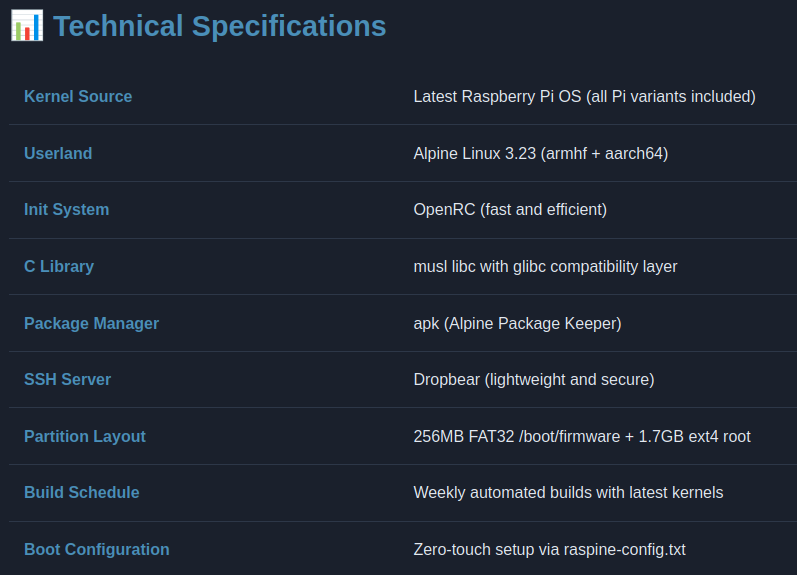
So first came RasPINE, RasPINE takes the kernel for RasPiOS, modules and boot code, along with the dev-tree and other essentials (basically all the hardware support) from RasPiOS, and merges that with a musl based distro (Alpine Linux).
What we get from this, is a small, fast, light system to build on. It is not Debian based, it is not Ubuntu and importantly for me, it’s not RasPiOS, that os has got old, fat and slow – and I want to breathe new life into your systems.
RasPINE is usable today, it is deliberately a seperate project from Pi-Star – because I am dedicated to not just providing Pi-Star for you wonderful people, but I am also giving you access to the same underlay to experiment with, build your own things with. You can check it out here: https://raspine.pistar.uk/
As if that was not enough, I have also created two repositories, one for APKs (the packages for Alpine and RasPINE) and one for DEB (packages for Debian, Ubuntu and RasPiOS) for the usual stack of software that Pi-Star is built on. I could have hidden this all away, but I want to lead the way in providing even more of what Pi-Star does, openly and freely for anyone that wants it.
You can check these out at https://apk.pistar.uk/ and https://deb.pistar.uk/
So to recap, we have a brand new OS (It’s actually over a year old), new software repos that are automatically updated, all fully open, and fully free, but where will this take us?
Pi-Star has not had much in the way of new stuff for a while, I hope you will understand from this post that you’re going to see why that might be – I’ve talked on/off for a long time about a re-write and it’s almost here. For those of you feeling brave, links will be up shortly for if you dare – there will be bugs, glitches and things that maybe don’t work quite the way you expect, however for those of you who were around in 2014 when OG Pi-Star took it’s first, shaky steps, you might also remember in the rapid development that was also happening back then.
So let’s drop some teasers shall we…
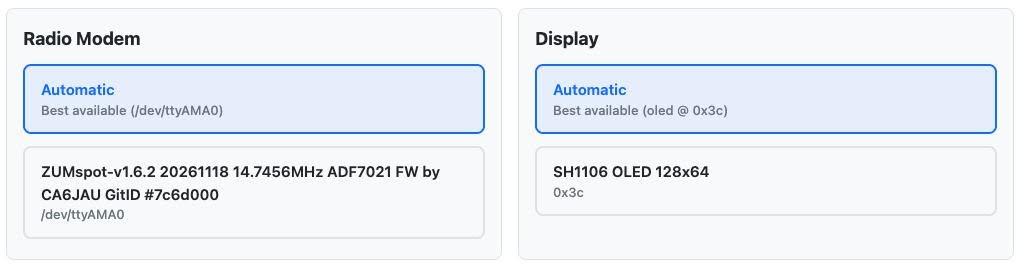
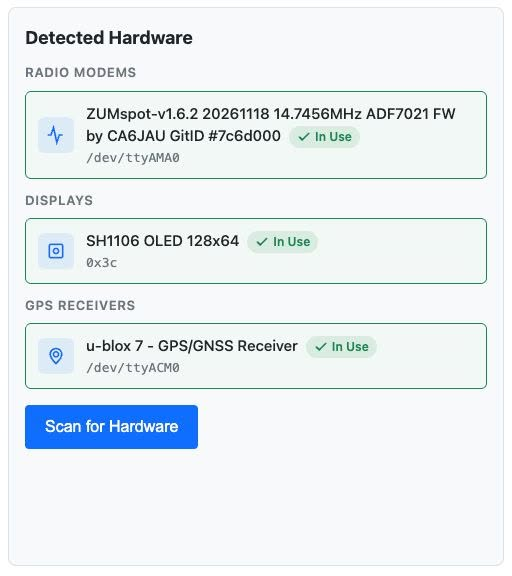
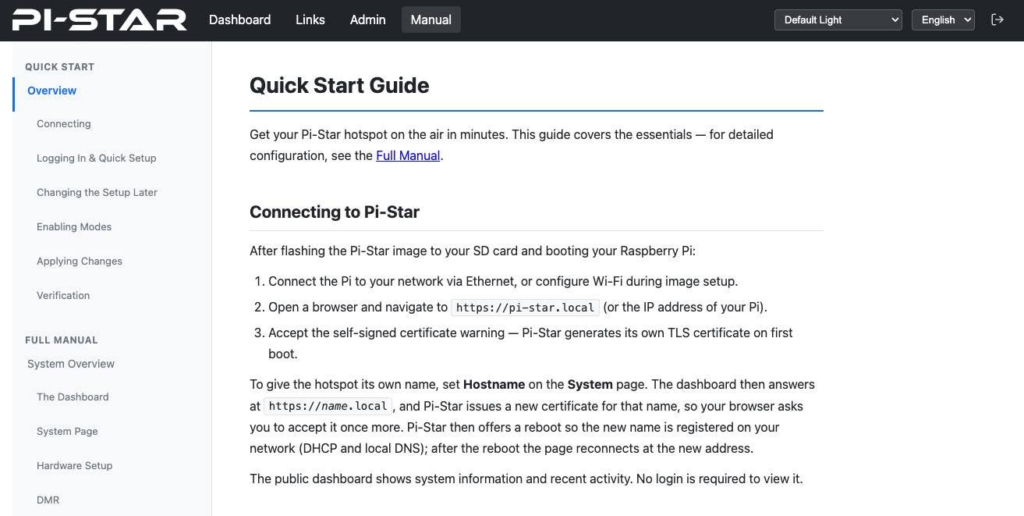
Here you will see, the old style login box from 2000 ish is gone, we have an all new dashboard system, auto hardware detection and even an on-board manual.
This is all fairly usable today (I’m covering my bases here, it IS usable, but I have no doubt once you all try it out, there will be some bugs to squash).
This is a re-write, a re-invention if you will, it is not the PI-Star you are used to, but I believe it is evolved in all the right places.
So what is the same? The name, the developer, the ideas and in the way OG Pi-Star made it easier to use the software that existed, I hope this will be the same level of evolution making another giant leap forwards.
Andy
73 de MW0MWZ