

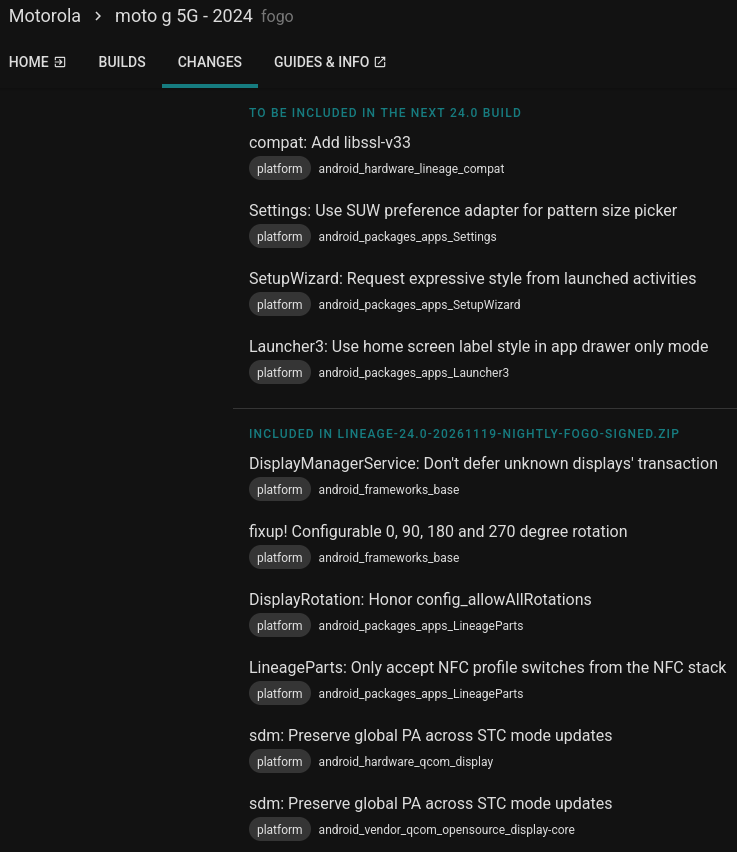
(Headline article below) This is diabolical, forcing devs to pay $25 with it reported that millions have complied adding up to a sizeable sum. All the major big tech megacorps turning into AI slop are working to restrict what software you can install on your devices, and squeezing developers for cash in the process, so a good time to kick them all to the curb for opensource. In regards to Google Android, there are opensource alternatives like LineageOS, GrapheneOS, CalysOS… with LineageOS supporting a lot more phones and GrapheneOS being more secure with several privacy enhancements. And a great benefit of running LineageOS on older phones is you’ll be running the latest Android version as my Moto G 5G 2024 ($120 on sale at Amazon direct from Motorola unlocked) and Moto G Stylus 2023 ($19 from Boost Mobile when a customer fully unlocked after 2 years) are both running Android 17 with OS updates released weekly. Of course Android has gone to a biannual update schedule of their code, but some bugs and security fixes are done by opensource developers.
And there are other ways to get apps like Obtainium which can pull directly from developers through Github and other dev platforms, or direct APK downloads.., Accrescent which is a secure platform for devs to directly offer software just getting started, F-Droid that checks and compiles from source code the software they offer while signing with their own keys, so you don’t have to stick with Google Play who is extorting developers and trying to restrict your freedom to run the software you desire. Also, you can turn off the Play Store scanning of your phone’s apps, which is just Google being a nuisance and spying on what you have installed outside their store. Or even forgo having the Play Store installed on your device altogether along with the rest of their apps. Since Google lets a lot of malware go through their store, how much safety are they really adding?
Google says almost all developers have already gotten on board with verification.
By Ryan Whitwam
Google announced Android developer verification last year, and despite numerous objections from developers and users, the company is forging ahead. It began blocking the installation of unregistered apps in some countries this fall, and the system is expanding globally soon. Google says it will start rolling out the requirement in all regions in January 2027, and it urges devs who still haven’t registered their apps to do so soon.
The apps you download from the Play Store all come from verified developers, and Google’s new requirement expands that requirement to apps from third-party sources. Once developer verification is live in your region, you won’t be able to sideload apps unless the developer has registered with Google, which is framed as a security measure. Verification requires providing government identification and paying a $25 fee, which will allegedly make it harder for nefarious actors to distribute malware and scammy apps.
In September, Google launched verification in Brazil, Indonesia, Singapore, and Thailand. Apparently, nothing exploded, so the company is now ready to expand. It previously said verification would go global in 2027, and it’s not wasting any time with the January start. It says that verification will reach all devices within “several months.”
So far, Google is getting what it wanted from this initiative, with “millions” of non-Play apps already registered. The company says this accounts for more than 99 percent of global Android app installs.
The verifier system service has already been rolled out to Google-certified devices running Android 8 Oreo or higher, which accounts for just about every Android device in the world outside of China and Russia. Google has also partnered with the biggest third-party app stores to enforce verification: Galaxy Store, Honor, Oppo, Xiaomi, Transsion, and Vivo. The system-level verifier is responsible for blocking installs, but these stores will only list verified apps once Google flips the switch.
Feedback accepted
Google has gotten a lot of feedback since announcing this change, and it has listened to some of it. Hobbyists will be able to register a free account to distribute apps to a small group. Google initially planned to limit this to 25 total installs, but that has since been increased to 50 installs. There’s also now an API that developers can use to streamline registering new application packages.
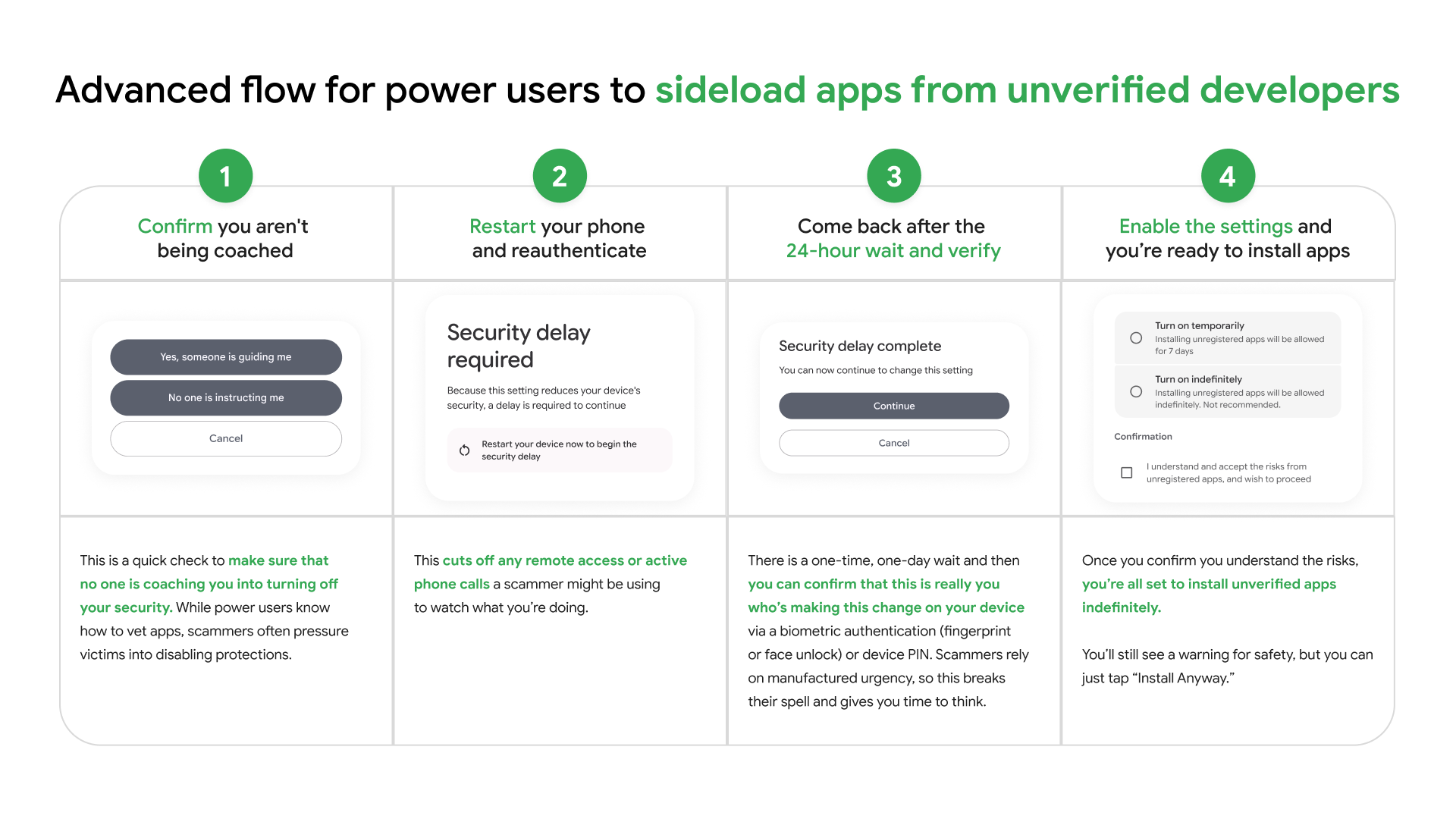
Google also relented and created an opt-out system for users who don’t want their installations limited. The so-called “advanced flow” will let you install whatever you want regardless of verification status, but it’s not a simple toggle. The option will be buried, and there will be plenty of scary warnings about the risks. You’ll also have to wait 24 hours to fully activate the feature. This setting is already live, so you can tell your phone to ignore verification right now.
Even if Google has managed to make verification a little more warm and cuddly, it still gives the company a lot more control. Developers in sanctioned nations won’t be able to verify their identities, locking them out of app distribution. Sideloading an app may also require a Google server connection. Only popular app IDs will be cached on devices for verification purposes. For others, your phone will have to check with Google before installing. These will be edge cases, certainly, but still very annoying ones.
As Google moves toward full verification enforcement, it has created guides for developers and app distributors to outline all the salient points. These guides suggest Google expects verification to be fully online by March 1, 2027.