

Don’t get happy thinking we got a win. As just like they let Roe v. Wade get reversed paving the way for states limiting abortion (corrupt judges block some states), they had the abortion drugs ready to go through the mail. My guess is they’re relying on data brokers, ALPR cameras and signal tracking going forward. The last being the worst as it’s capable of tracking so many devices and everyone in a vehicle. This is no hope for slowing the inbound surveillance state.
https://reclaimthenet.org/supreme-court-geofence-ruling
Carrying a phone through the wrong neighborhood no longer counts as consent to a government search.
By Dan Frieth
A 6-3 decision says geofence warrants, the tool that lets law enforcement vacuum up everyone near a crime scene, trigger the Fourth Amendment.
US Police can no longer demand a digital dragnet of everyone’s phone location near a crime scene without answering to the Fourth Amendment. The US Supreme Court ruled 6-3 on Monday that the geofence warrants law enforcement has relied on for years count as a search of the people they catch, even when those people did nothing but carry a phone through the wrong place at the wrong time.
We obtained a copy of the ruling for you here.
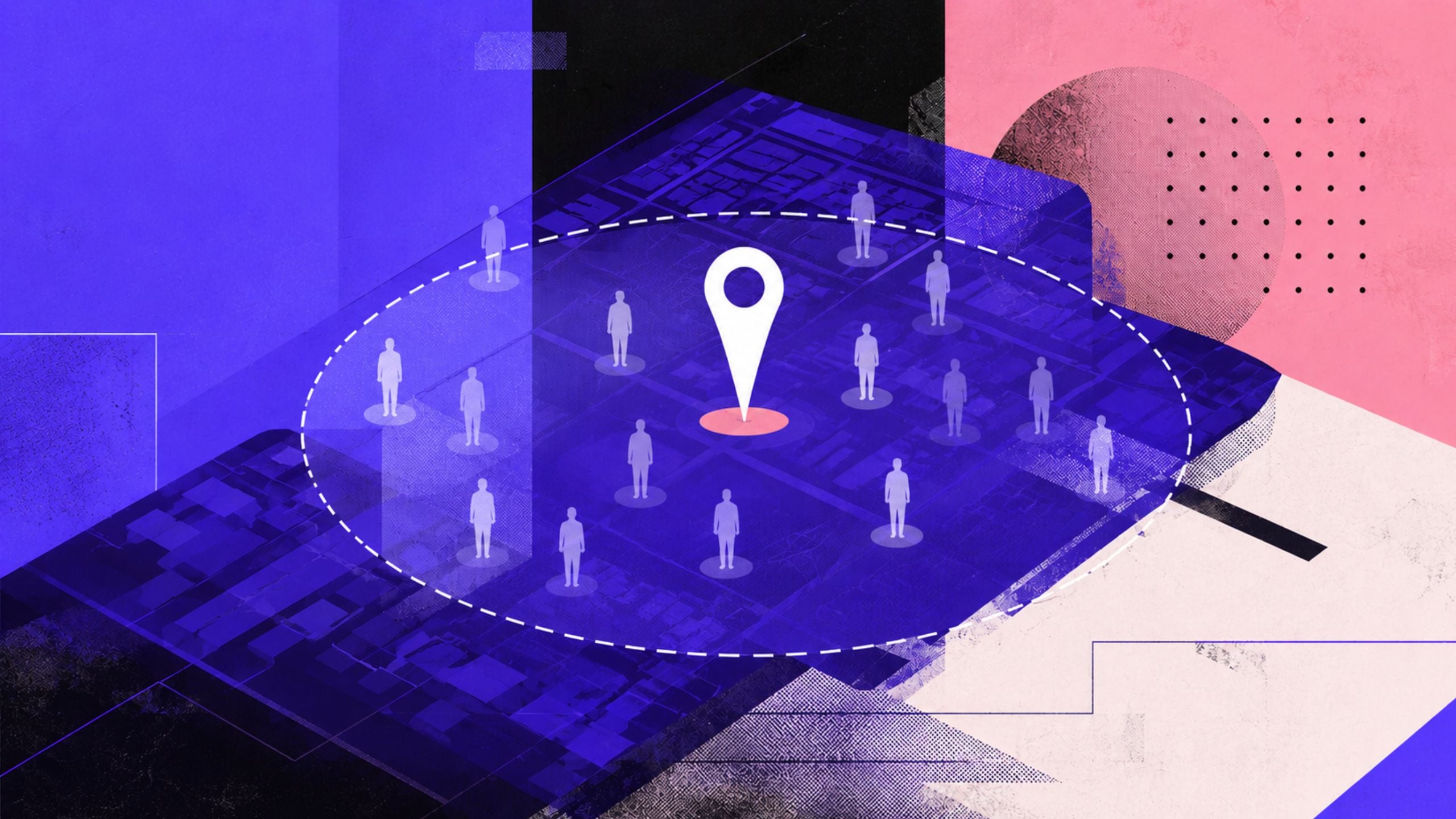
A geofence warrant treats location itself as the suspect. Police draw a virtual fence around a spot and a stretch of time, then force a company like Google to turn over data on every phone that passed through. The method does not begin with a specific person and a trace their movements. It begins with everyone’s movements and goes looking for a person, which is why it gathers bystanders by the thousands.
Justice Elena Kagan, writing for the majority, held that the records pulled into these warrants carry a “reasonable expectation of privacy,” even for someone out in public.
“An individual has a reasonable expectation of privacy in records about his cell phone’s location, and police intrude on that constitutionally protected interest when they demand the information – even though for only a limited time, and from a third-party tech company,” Kagan wrote.
The majority refused to treat the everyday act of using a phone as permission to hand your life to the government. A cell-phone user, Kagan wrote, “is not to be viewed as sharing private information with third parties – which then can be freely passed on to the government – just by doing the ordinary things cell-phone users do.”
The opinion ran through the apps that pull location all day, the maps app that wants to route you home, the rideshare app that keeps tracking after you’ve climbed out, and a dozen others doing it in the background.
The government’s fallback was that two hours of someone’s movements is too thin a slice to deserve protection. The Court rejected the notion that privacy only switches on once the tracking runs long enough. Justice Sonia Sotomayor wrote that “even short-term monitoring” of a person’s movements can yield “a wealth of detail about [his] familial, political, professional, religious, and sexual associations,” and she listed the stops most people consider nobody’s business, trips to “the psychiatrist, the plastic surgeon, the abortion clinic, the Aids treatment center, the strip club, the criminal defense attorney, (or) the by-the hour motel.”
The government also argued that anyone running Location History chose to, that the feature is optional, and so the data it produces is fair game. It leaned on its own figure that “only about one-third of active Google account holders actually opted into the location history service.”
The majority called that argument “meritless” and spelled out why in terms anyone who has set up a phone will recognize. “That argument ignores how and why Google users turn on location history: Google repeatedly prompts users to turn on the service, often warning that devices will not “work correctly” otherwise, while not disclosing in that prompt how frequently users’ location information would be recorded, how precise it would be, or how it might be given to the government,” the judges wrote.
The case behind the ruling, Chatrie v US, grew out of an armed robbery at a credit union in Midlothian, Virginia, where the robber left with $195,000.
Investigators ran out of leads and turned to a geofence warrant aimed at Google. Their eventual suspect, Okello Chatrie, had switched on Google’s optional location history, which logged his position every couple of minutes and placed him near the credit union around the time of the robbery. He later pleaded guilty and was sentenced to 12 years.
Chatrie’s lawyers had argued the search was far too broad and breached his Fourth Amendment shield against “unreasonable search and seizure.” The Court agreed that a search happened. It left the harder question, whether this particular search was reasonable, to the lower court, which now has to decide whether the “search was reasonable, meaning that each of its steps was properly described with particularity and found to be supported by probable cause.”
Officers never have to name a target. They just define a place and a window of time, and Google produces everyone who was inside it. That one-third of accountholders still came to more than 500 million people, by the count Chatrie’s lawyers gave the court. Google itself admitted that geofence searches “often run a high risk of sweeping in innocent users–sometimes thousands of them,” reaching into private homes, apartment buildings, government buildings, hotels, places of worship, and busy roads that police had no cause to search.
This is the first time the Supreme Court has taken up the scope of the Fourth Amendment in the digital age since 2018, when a 5-4 majority in Carpenter v United States held that the government generally needs a warrant to obtain a person’s cellphone location history.
Monday’s decision carries that logic from a single tracked suspect to the whole crowd a geofence pulls in.
The ruling lands on a procedure that no longer exists. Google changed how location history works in July 2025. It now stores that data on users’ own devices instead of its own servers and says it can no longer answer geofence warrants for it.
The exact procedure the Court just ruled on is one Google has already abandoned but the principle the justices set down outlasts it, though, and it reaches whatever location database law enforcement turns to next.