

Beyond the obvious money grab by forcing registration and license plates, I have to think this is for Flock ALPR cameras to track people’s movements, especially with the plan for 15 minute cities. Flock has new cameras they left open on the internet that were on biking and walking trails, with the AI automatically zooming in on pedestrians, able to read phone screens… You’ll know the plan if you see this legislation show up in other blue states.
https://sfstandard.com/2026/04/30/e-bike-regulation-license-plates-laws-dmv/
New bills would require license plates for Class 2 and Class 3 e-bikes and lower peak speeds for models that children under 16 can ride.
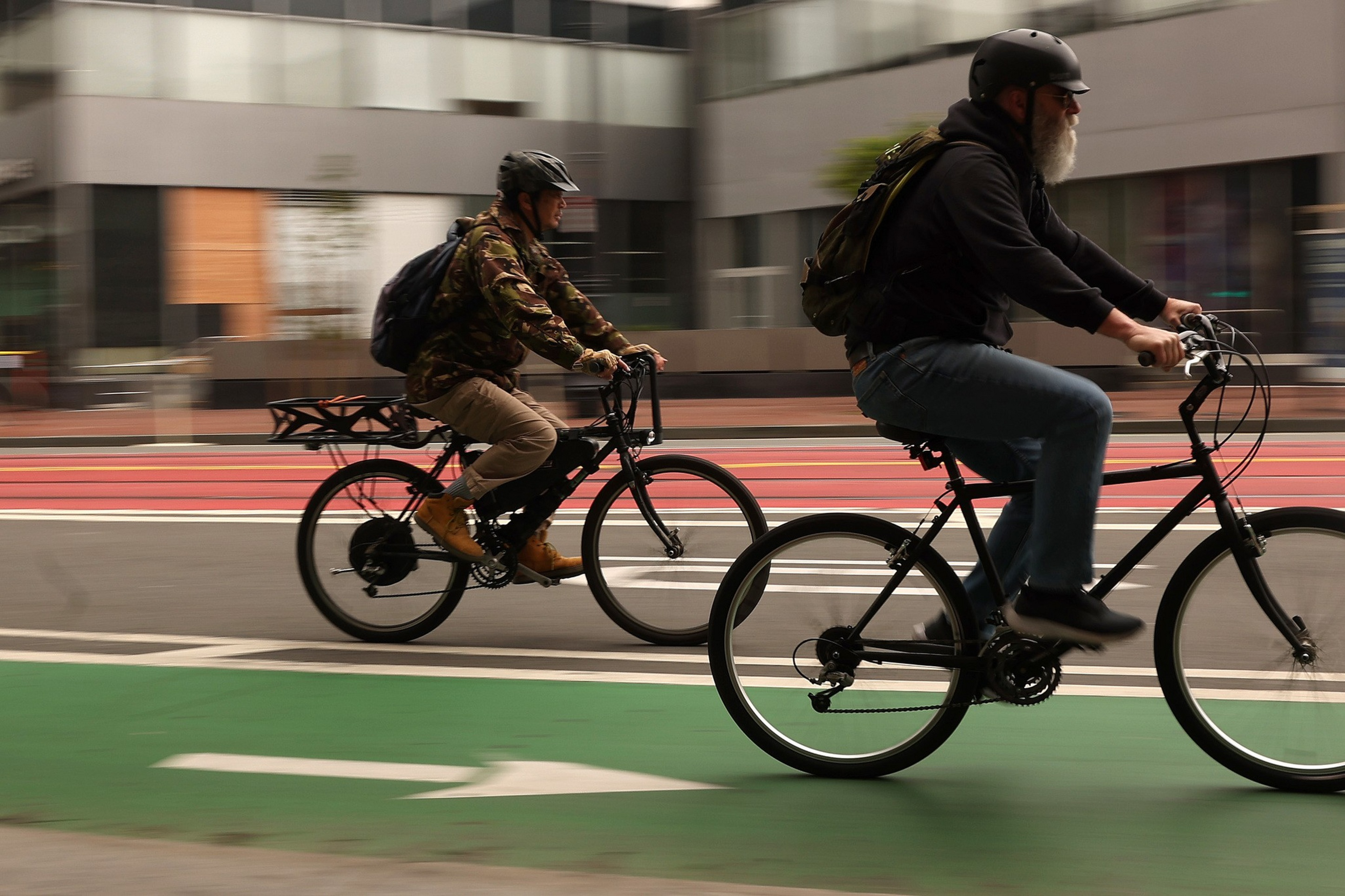
By Garrett Leahy
If state lawmakers have their way, you’ll have to get a license plate for your e-bike, and if you’re planning to buy one next year, it’ll be slower.
Amid growing concerns about e-bike safety, particularly among children in Bay Area suburbs, two bills introduced this year aim to make it easier to ticket riders and reduce the top speed of some models.
AB 1942 would require certain e-bikes to be registered with the Department of Motor Vehicles and display license plates, and AB 1557 would slow e-bikes that children are allowed to operate.
Both bills are still being reviewed in committee. If either bill passes this year, it will take effect Jan. 1.
Despite the lawmakers’ well-meaning intentions, San Francisco cyclists aren’t pleased.
Sitting astride his e-bike, JT Munz said requiring cyclists to register with the DMV would discourage people from giving up cars. He said he could support reducing the speed limit in the future but opposes it for now, arguing that the city’s patchy bike-lane network forces cyclists to mix with car traffic, where riding at higher speeds can feel safer.
“The real safety problem isn’t e‑bikes — it’s car traffic in cities,” he said. “We should be making it easier to bike, not harder.”
Those on non-powered bikes also said they oppose the legislation.
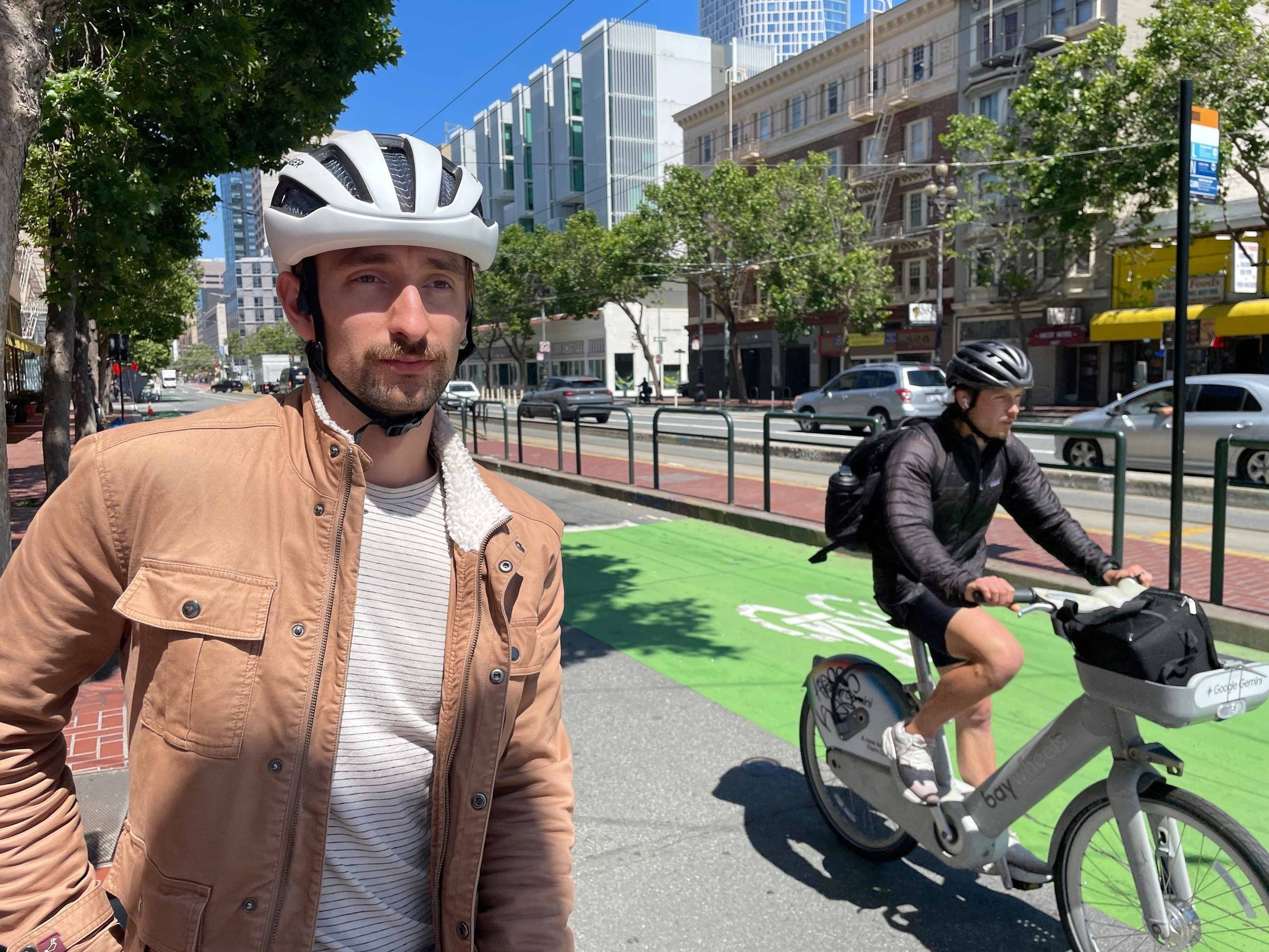
Liam Eraneta, a 25-year-old Strava employee, said he sees the case for license plates — food delivery riders on e-bikes can be a nuisance, blocking sidewalks and running red lights. But he opposes both bills, worried they would deter people from switching to bikes. The speed cap especially troubles him,
“I get why people want to regulate e‑bikes, but I’d probably vote no on both of these — they just make it harder for people to get on bikes in the first place,” he said.
E-bikes fall under three classes (opens in new tab). Class 1 bikes are equipped with a pedal-assist motor that cuts power at 20 mph. Class 2 bikes have a throttle that lets you accelerate without pedaling, up to 20 mph. Class 3 bikes also have a pedal-assist motor but can go faster — up to 28 mph before the motor turns off — and riders must be 16 or older. If it’s more powerful or faster, it’s not an e-bike — it’s an e-moto (opens in new tab), or an electric dirt bike, which don’t have pedals and are prohibited on streets or highways but sometimes are marketed as e-bikes.
AB 1942 (opens in new tab) would require riders of Class 2 and Class 3 e-bikes to register with the DMV and display a license plate. AB 1557 (opens in new tab) would cap the bikes’ peak motor power at 750 watts and lower the speed at which they stop providing motor assistance from 20 mph to 16 mph for Class 1 and Class 2 bikes, the models that children under 16 are allowed to ride.
Critics say e-bikes are the wrong target; it’s the illegal use of e-motos, that’s the problem. Parents often buy what they think is an e-bike, only to end up with a device too powerful for a child.
There is no age limit to ride an e-moto, but they must be registered (opens in new tab) with the DMV as an “off-highway vehicle,” similar to a dirt bike, and must display an OHV plate or sticker.
9 readers have shared their thoughts on this story
Another bill, SB 1167 (opens in new tab), would prohibit e-motos with more than 750 watts of power and capable of exceeding 20 mph on motor power alone from being marketed as e-bikes.
Assemblymember Rebecca Bauer-Kahan, the East Bay lawmaker behind the e-bike license plate bill, said she is pushing the legislation due to concerns from law enforcement about issuing citations for electric bikes moving at unsafe speeds without pursuing them, which can be dangerous. Having license plates will also make it easier to tell if a child is legally riding an e-bike, is riding an illegally modified e-bike, or is illegally riding an e-moto, she said.
“We’re seeing in my district, but I think in many places in the state, a huge rise in the number of e-bikes on our trails, on our roads, and a staggering increase among our teens and tweens,” Bauer-Kahan said. “If you want to be on the road on one of these bikes, we have to have a way to enforce the rules of the road.”
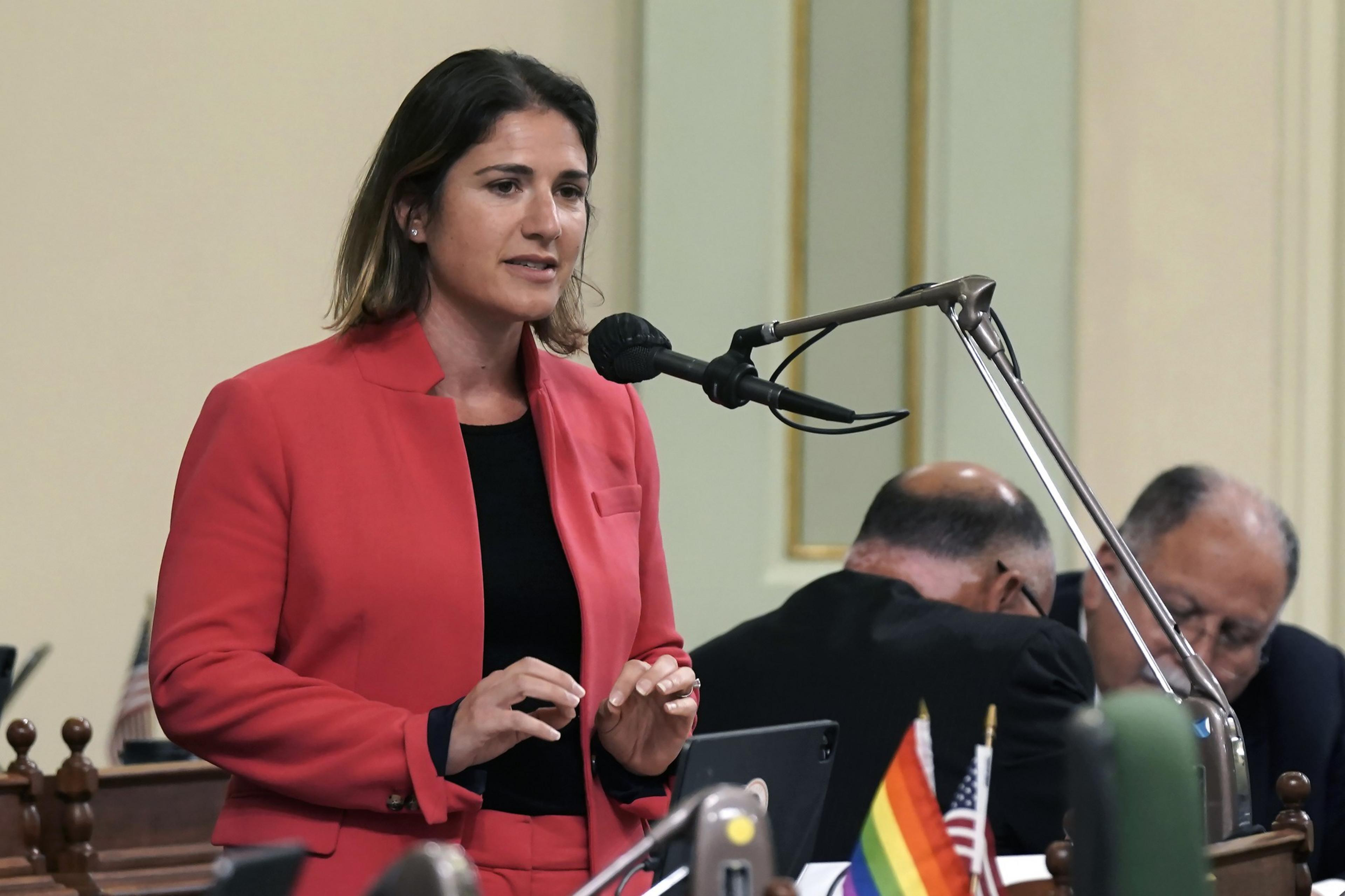
She admitted, however, that she’s unsure what kind of plates e-bikes would display and if they’d register as mopeds or OHVs.
“We are working on that with the DMV. It has not been ironed out,” she said.
Rachel Clyde, a senior organizer for the San Francisco Bicycle Coalition, said the license plate requirement would deter people from riding.
“We should be supporting and passing laws that support and expand access to e-bikes, not to make it more difficult for people to own and use them,” Clyde said. “The primary problem that we are seeing, both on the streets and in the news, is the confusion between what is an e-bicycle and what is an e-moto.”
Brett Thurber, co-owner of the New Wheel e-bike shop on Valencia Street, said the speed restriction proposed by AB 1557 would disincentivize manufacturers from making and selling bikes for California customers, thereby restricting his supply.
But the bill’s author, Assemblymember Diane Papan, argued that the new speed restrictions would be identical to those in the European Union and would present minimal issues for manufacturers. She said her interest in regulating Class 1 and 2 e-bikes is to protect children, adding that she didn’t target e-motos, because they are not allowed to operate on public roads at all.
Papan’s bill also specifies a limit on peak power output, intended to curb acceleration speed, particularly for children. Some e-bike models are advertised at the federal limit but can briefly surge well beyond it, Papan said. For adult riders, Papan said there are faster options with higher wattage motors.
“I’m not in the e‑bike business. I’m in the safety business,” she said.