

Well, pasteurization was developed for wine and brought to milk through a propaganda magazine article. They’re basically cooking the nutrition out of the milk to harm your health in the long term as well as supporting large corporate operations with shipping and shelf life. We buy and drink raw milk from local ranches, and not only is it healthier, it’s much tastier. And humans have been drinking raw milk for centuries as a major source of nutrition in agricultural societies without issue.
The State Ag Dept. has ordered Cody’s Hippy Cow Creamery to stop selling its popular raw milk lattes. Tyler Lindholm, the architect behind the Food Freedom Act, says the state is wrong and will push for a legislative fix. “That’s just insane,” he said.
By Renée Jean
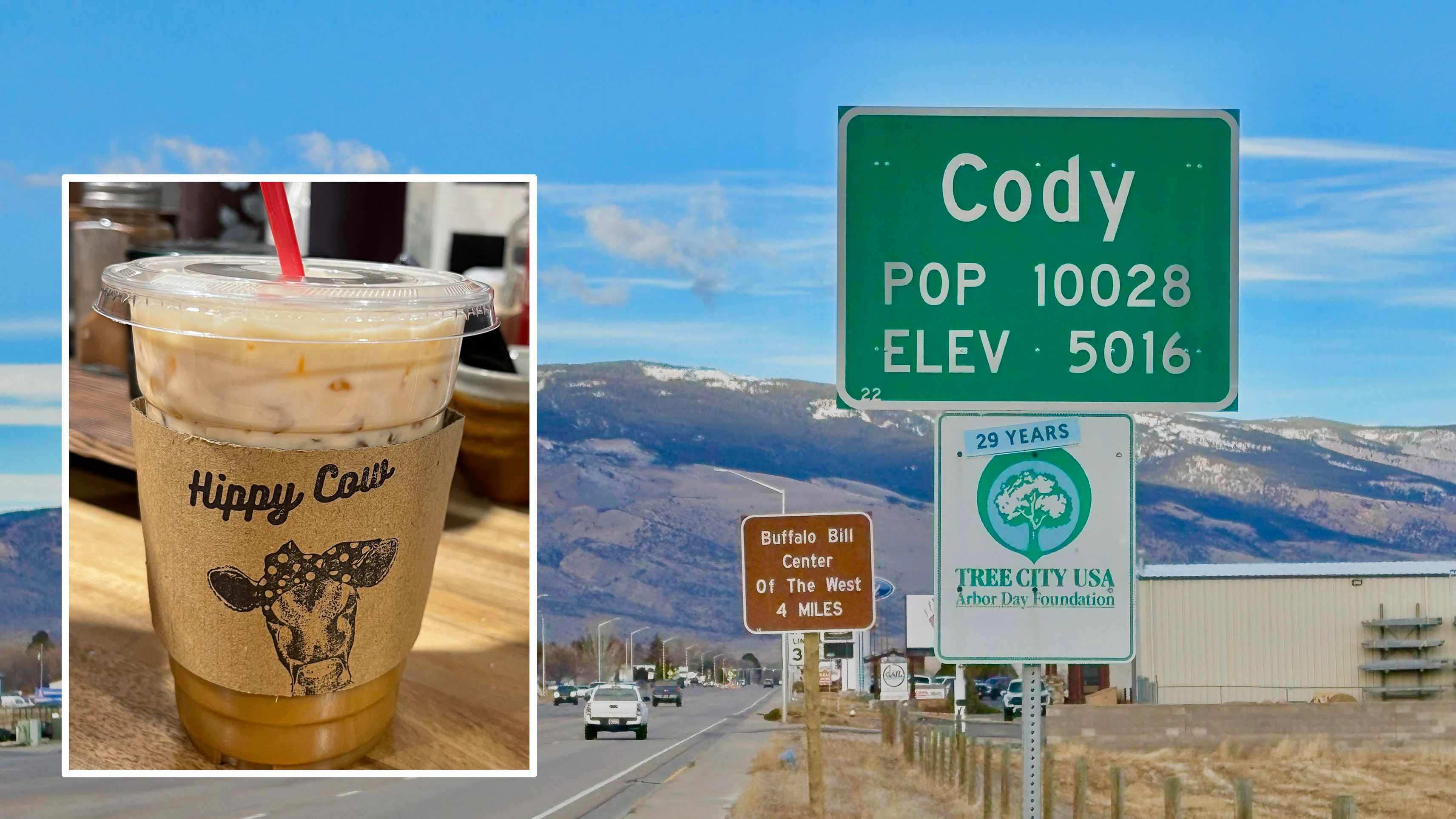
Cody’s Hippy Cow Creamery stumbled onto a popular product when it shared a few raw milk lattes with some friends.
Word of mouth quickly spread, and co-owner Sadie Howard soon added the top-seller to her menu.
Now a Wyoming Department of Agriculture health inspector has ordered the business to stop selling the popular drinks at the Cody business, even as the chief architect of Wyoming’s Food Freedom Act — former state representative Tyler Lindholm — insists the state’s cottage food law explicitly allows such drinks.
Lindholm has already clashed with the Wyoming Department of Agriculture earlier this year after its recent shutdown of WyFresh Farm’s selling of USDA-inspected meat without a license near Cheyenne.
Lindholm said then that regulators are stretching the Food Freedom Act beyond what lawmakers intended, and he sees the Hippy Cow latte ban as more of the same.
Howard told Cowboy State Daily the initial concern that brought the health inspector to her business was prepared foods with meat being sold by some of the vendors.
But attention soon turned to Hippy Cow’s espresso bar, where the family had begun serving raw milk lattes made from their own cows’ milk.
Howard said the inspector told them they would have to pasteurize the milk and have it inspected to sell lattes at the store.
“But she said if we pre-made the drinks at our farm and brought them to our store, we could do that,” Howard said. “And she said something to the effect of we could put a shot on the table and somebody could purchase a little bottle of the milk and pour them in together.”
But in that case, the store cannot mix raw milk into the drink at the store or froth the drink. Nor can it add any flavorings to the drink, the way a barista would do, Howard said she was told.
The customer would have to do all those things themselves.
“She wrote us up a cease-and-desist order on all coffee sales,” Howard said.
Lawmaker Pushback
Lindholm told Cowboy State Daily the state’s inspector is flat-out wrong in her interpretation of the law he wrote.
This is the second time Lindholm has recently disagreed with the Wyoming Department of Agriculture’s interpretation of the Food Freedom act.
The first time was after the state banned WyFresh in Cheyenne from selling USDA-inspected meat at its farm stand.
State regulators said WyFresh had failed to obtain a federally required $200 license, required by anyone processing, distributing, storing, or preparing any food, including meat for sale.
“With the WyFresh deal in Cheyenne, I think you can justify the confusion or the difference of opinion,” he said. “But (in Cody) I can’t see where this inspector is coming from.
“I mean, I’m looking at the law right now, and I don’t see anywhere they would be deriving that from.”
Reading from the law, Lindholm emphasized that producers can use third-party retail locations to sell eggs, dairy products, and other homemade food products.
Such sales may also occur at farmers markets, farms, ranches, producer homes and offices, or any location that both producer and an informed, end consumer have agreed to.
In his view, Hippy Cow, as the producer of the milk, should be doubly protected by the law because it is both seller and producer.
“I’ve looked through the law, and I’m just really confused,” he said. “I mean, what’s the danger in putting cream in coffee at this point? They’re allowed to still sell cream and still sell coffee. It’s just combining the two that could be very scary?”
Lindholm also views it as ridiculous to say that the business can’t mix the drink for the consumer or froth it.
“That’s just insane,” he said. “Frothing heats up the cream, so where’s the problem? I don’t know. In this situation, I’m exceptionally concerned. They don’t want them frothing cream No. 1 and No. 2, they also went after their burritos.
“They were acting as a third-party agent or a designated agent for those burritos, which were made with USDA-inspected meat in a commercial kitchen.”
Everything in that scenario “checks out” under both USDA and state law, Lindholm said.
“Wyoming law says that they can act as a designated agent,” Lindholm said. “It’s wild to me. I don’t know who or where the direction from this situation is coming from.”
Lindholm has already said he wants to see more legislative tweaks to Wyoming’s Food Freedom law. The situation with Hippy Cow underscores that need.
“Fortunately, there’s several very interested state legislators in what’s happening,” he said. “And a lot of those folks contacted me, and we had some good conversations.”
Lindholm said he’s been assured they work to find some clarity in the whole situation in the immediate short-term, as well as weighing long-term fixes to the legislation.
“As these issues keep coming up, I would ask people to reach out to me and Americans for Prosperity,” Lindholm said. “These are the kind of issues that we don’t like to hear about, and we’d like to advocate and help people advocate for themselves.”
Food Safety Concerns
Frothing does heat up cream or milk added to coffee, but not to the temperatures that are required for commercial pasteurization.
Frothing heats milk to between 130 to 150 degrees Fahrenheit, which is hot enough to kill some pathogens, but not all of them.
Commercial pasteurization, meanwhile, requires heating milk to 161 degrees Fahrenheit for at least 15 sustained seconds to ensure all harmful bacteria has been killed.
Frothing can put milk into what’s considered the “danger zone” temperature wise, where bacteria grow rapidly. That zone is from 40 degrees Fahrenheit to 140 degrees Fahrenheit.
Wyoming Department of Agriculture spokesman Derek Grant confirmed there are ongoing discussions with Hippy Cow Creamery and said the agency is working with them to “rectify the situation.”
“Our inspectors deal with unique scenarios in food establishments regularly,” he said. “We ask them to enforce Wyoming statutes and federal laws/regulations as they are written.”
Food safety, Grant added, is an issue that must be taken seriously because lives are at stake.
“We can’t foresee all situations that may arise and do our best as a department to work with establishments when these unique situations happen,” he said. “Ultimately, in the food safety business, the penalty for failure is extraordinarily high for WDA employees and goes beyond the job.
“They take food safety seriously and enforce laws and regulations as written, on behalf of Wyoming consumers.”
Grant did not specify what specific rule had been broken by mixing raw milk with coffee for Hippy Cow’s lattes. Nor did he address any of Lindholm’s criticisms, focusing instead on general food-safety responsibilities.
Times Have Changed
Howard told Cowboy State Daily on Friday that someone with the Wyoming Department of Agriculture had called her again on Friday to talk about the situation but is continuing to back the local health inspector’s ruling — at least for now.
The individual also indicated he would do more “digging” into things, Howard said.
Howard acknowledged there have been concerns about unpasteurized milk in times long past, but said times have changed since the days when cattle were being kept in cities in unsanitary conditions and fed poor diets that made them more vulnerable to diseases.
“Pasteurization for the time was a great thing, and it’s still a good thing for some people,” she said. “But I think you should have the absolute choice whether or not you want to drink raw milk.”
Howard said her health improved after she began drinking raw milk instead of pasteurized and many of her customers have related similar experiences to her since Hippy Cow Creamery began.
Public health experts have said that raw milk can carry pathogens like E. coli and Campylobacter and that claimed health benefits remain unproven.
Howard agreed there is a time and place for pasteurization.
“It’s good when you’re trying to feed the whole world and you’re shipping milk all over the country,” she said. “But we’re not shipping milk all over the country. This is focused on our community.”
Howard also believes that small cottage food industries like Hippy Cow Creamery are good for the nation’s health in general, for both economic and the personal health of people living in communities.
“I think that’s what kind of needs to come back to America is small farms, small dairies, providing for their own community,” she said.
“Maybe some of the health will come back into that. We know America is not healthy. Just the shipping of food, and the adding of chemicals is harming us.”