

These things are dangerous, and not a good look for how effective the war effort has been.
https://southfront.press/u-s-is-scattering-landmines-from-air-near-iranian-missile-bases-photos/
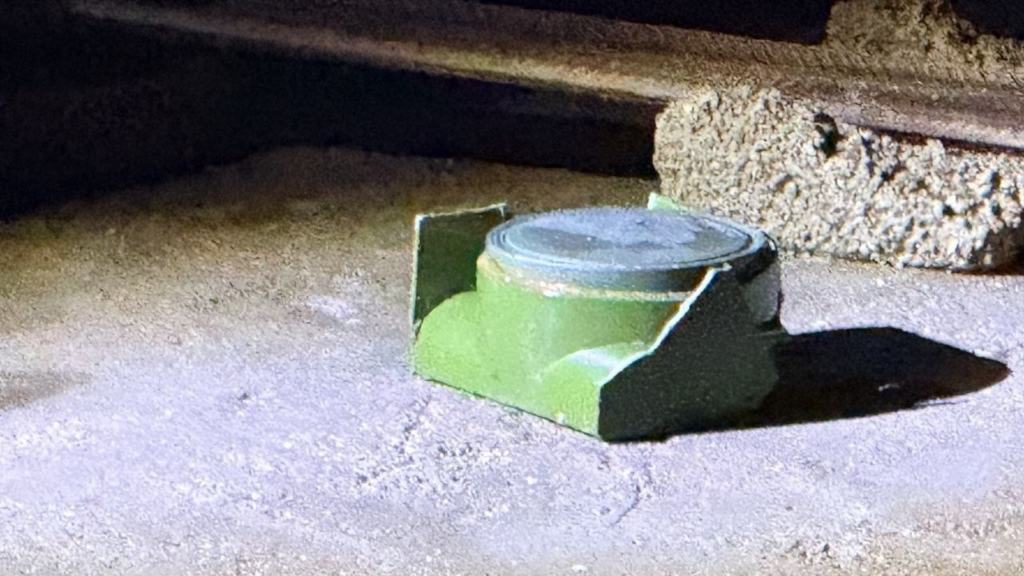
The United States military is scattering landmines from the air near Iranian missile bases to hunt launchers, and Iranian media has already reported civilian casualties.
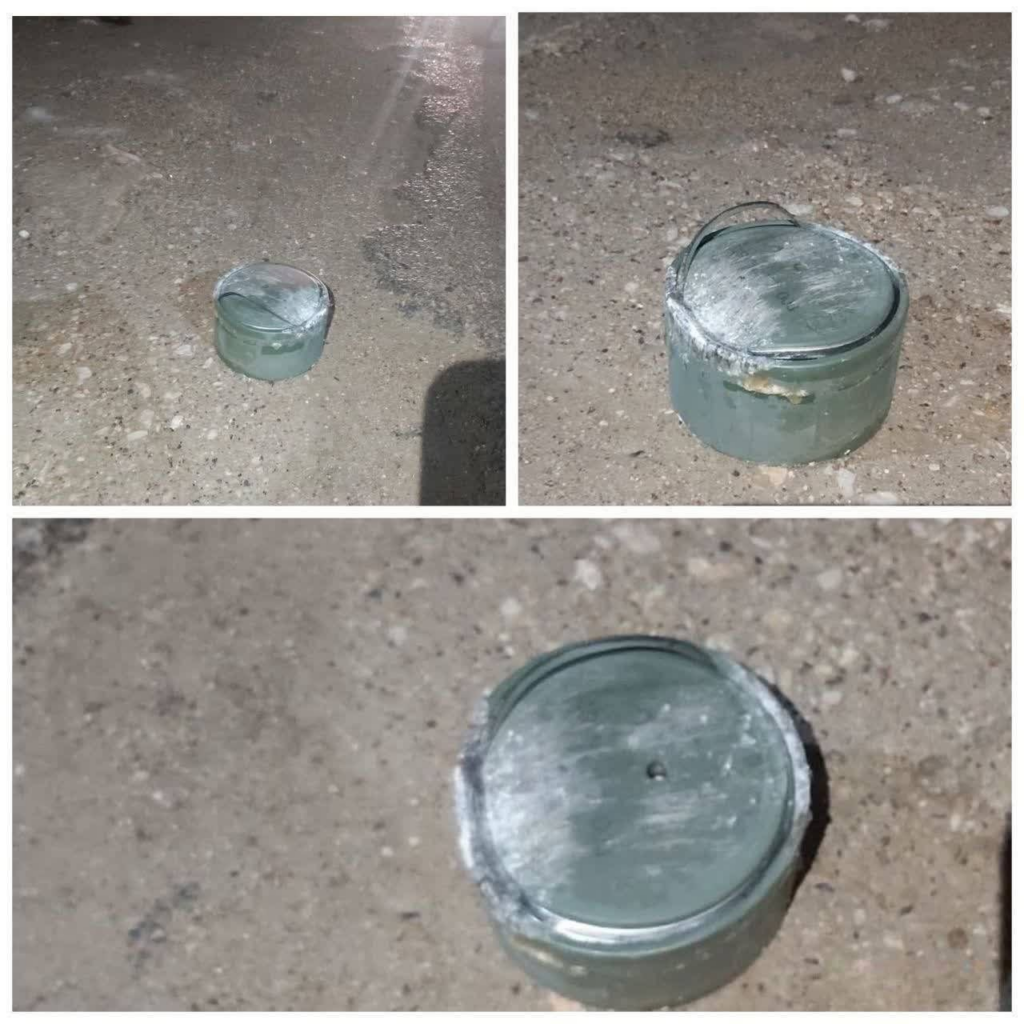
The accusations first came on March 26 from Iran’s semi-official Tasnim News Agency, which shared photos of what appear to be BLU-91/B scatterable anti-tank landmines.
“These explosive packages resemble ready-made canned food, are somewhat larger than tuna cans, and contain explosives that detonate after being opened, causing casualties,” Tasnim wrote on Telegram. “These packages have been dropped in the skies over the southern suburbs of Shiraz, especially in the village of Kafari, and unfortunately have caused the martyrdom of several people in these areas.”
Canadian lawyer and activist Dimitri Lascaris — who is currently in Shiraz in the southwestern Iranian province of Fars — shared footage showing the remains of similar landmines that exploded right between homes in Kafari, and at least three others some two kilometers away from the entrance to what is reported to be Shiraz South Missile Base, an Iranian “missile city.”
The landmines were likely scattered there to hit any launcher leaving the base, which had been already bombarded by the U.S.
This is the first time such a weapon has been used against Iran since the start of the American-Israeli war on the Islamic Republic around a month ago.
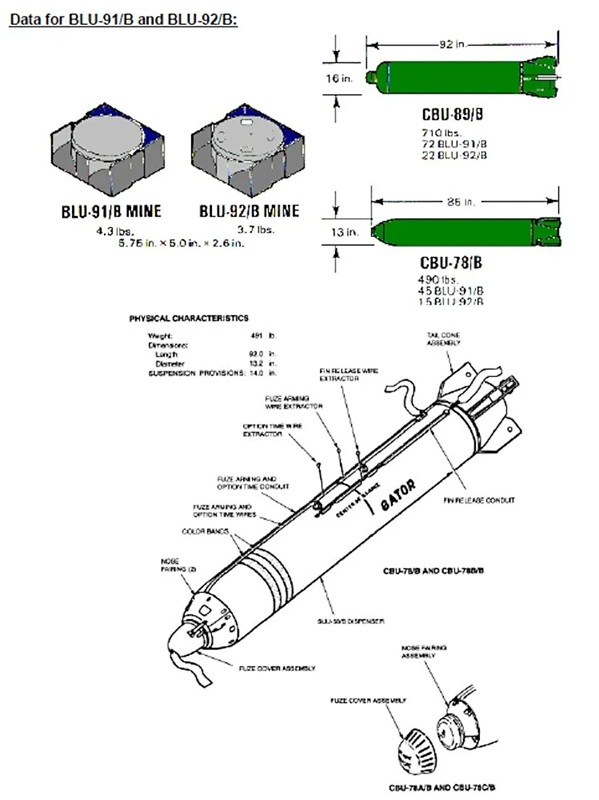
The BLU-91/B is a part of the U.S. military’s GATOR mine system, mainly used with two dispenser systems — the Navy 230 kg CBU-78/B and the Air Force 450 kg CBU-89/B.
The mine is a low flat cylinder with a rectangular aeroballistic shell. A magnetic sensor in the mine detects potential targets. When a suitable target reaches the most vulnerable approach point it detonates the mine. The mine is also triggered if the mine is moved, or if the battery reaches a certain low voltage point.
Once the fuse is triggered, a small clearing charge is fired in order to clear any debris that may be on top of the mine. A second larger charge is triggered 30 ms later, creating an explosively formed penetrator capable of penetrating up to 70 mm of armor.
The mine weighs around 1.95 kilograms and is 127 millimeters in diameter, with 580 grams of an RDX and Estane explosive mix.
The CBU-78/B could carry up to 45 such mines, while the larger CBU-89/B can carry 72. The latter can be also equipped with the Wind Corrected Munitions Dispenser guidance tail kit, which includes a GPS-aided inertial navigation system. It became a precision-guided munition designated as CBU-104, with a range up to 20 kilometers.
In use these bombs are dropped from aircraft flying at speeds between 370 and 1,300 kilometers per hour, and at altitudes of between 100 and 1,200 meters.
An FMU-140/B fuse controls the opening of the dispenser at one of 10 predetermined altitudes between 90 meters and 900 meters using a doppler ranging radar or alternatively a 1.2 second timer.
Mine arming begins when the dispenser opens with the activation of the mines’ vanadium pentoxide batteries. Once the mines reach the ground they become armed between 1.2 and 10 seconds. The mines self-destruct after a preset time which can be set to 4 hours, 15 hours or 15 days. Any that do not will become disabled after 40 days when the batteries discharge fully.
Such mines are highly dangerous, as their failure leaves explosives behind, and they cannot distinguish between a combatant and a civilian while active.
The use of these mines shows that the U.S. and Israel have failed to completely destroy missile cities like the Shiraz South Missile Base, which remain active.
It also indicates that the two allies are incapable of maintaining aerial presence over such bases, via fighter jets or combat drones, around the clock.