

My main Raspberry Pi 5 Bitcoin node was knocked offline overnight. I had to remove the flash drive and fix it on another computer (the blockchain is stored on a SSD mounted via Raspiblitz and was unaffected). My backup Bitcoin node running on another Pi 5 was fine. But upon reconnecting my node I noticed the following nodes connected, all listing Knotzi and BIP148, which appears to be derogatory to Knots users running BIP110 like myself. BIP148 was the Segwit user activated soft fork of Bitcoin being used as a comparison of the BIP110 soft fork with a similar activation mechanism.
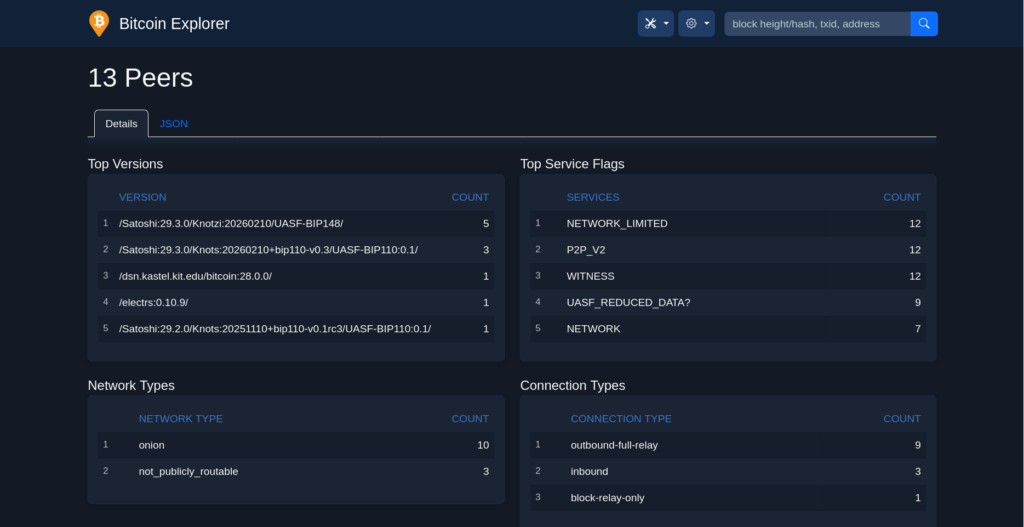
This would appear to be the faction trying to take over Bitcoin by supporting Bitcoin Core v30 with making Bitcoin data storage, all to make it more difficult to run a node and store the whole blockchain, as well as possibly making node runners vulnerable to having illegal material (CSAM?) stored on their node. They have also supported the hacking of the protocol for images and blowing up the UTXO set containing that data, making it more difficult for miners who now need a lot more memory to hold the whole UTXO set in memory (you could argue an attack on OCEAN mining and individual miners who make their own blocks). So these suspect nodes were all coming in via Tor, but after a while, I checked my node again and they were all gone. This faction trying to pervert Bitcoin into something other than money have been trying to call Knots users, specifically Luke DashJr and Mechanic, nazis promoting censorship along with a lot of other personal attacks instead of arguing about the technical merits, as they have no legitimate arguments for SPAM and SCAMs on the Bitcoin blockchain. So was this an attack or did my Pi 5 just have an issue? I’m not sure, but in the past they did run custom node software trying to harm Knots users by requesting the full blockchain repeatedly causing them to exceed their total cable bandwidth allotment for the month. The way they’re getting eventually dropped makes me think they’re getting blocked by the client for bad behavior. Consequently, my backup Pi 5 node running fine doesn’t have any of these clients connected to it.
And I’ve been running the Bitcoin software on a Raspberry Pi since the Pi 2 and the blockchain was 60GB, easily fitting on a thumb drive, moving it to each new Raspberry Pi platform. So it’s a nostalgic thing for me which also demonstrates that you don’t need the most powerful computer to run a Bitcoin node. Though today, it’s better to get one of these small x86_64 computers that are more robust with almost as good power efficiency, as they’re more reliable and powerful overall.