

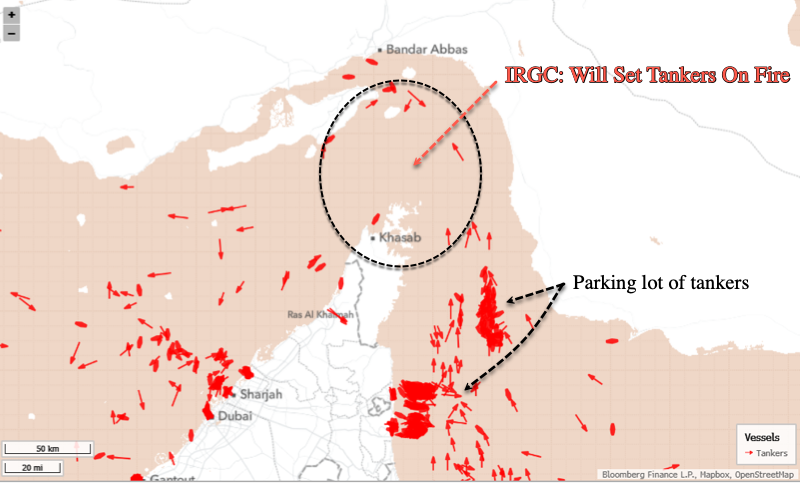
Some interesting information on the oil facilities being targeted by Iran, and they’ve really gone after the UAE which is extremely aligned with the west, as the US and UK train their military officers. The UAE actually has facilities to take all but the largest aircraft carriers with specially built recreation area for American soldiers. But the graphic showing all the shipping traffic is also interesting as most people don’t realize just how much shipping traffic is out there. And the way Iran is lashing out at all their neighbors, about to get more advanced supersonic missiles from China, and they make the case for this being a good military operation to throttle them before they become a bigger problem, possibly threatening our navy vessels. And they could have took the peace deal which included free nuclear fuel salvaging their economy, if they gave up their nuclear program and enriched material. And the new missile threat might be why all their neighbors supported this military action. And locking China out of their cheap oil might be their punishment for selling the missiles to Iran.
By Tyler Durden
One day after a reported Iranian drone strike forced Saudi Arabia’s largest oil refinery offline, with high-resolution post-strike satellite imagery showing visible damage, multiple reports on Tuesday morning suggest additional energy infrastructure in two Gulf states has also been targeted in suspected Iranian drone attacks.
Bloomberg reports that “falling debris” from an intercepted drone sparked a major fire at the United Arab Emirates’ major oil-trading hub of Fujairah.
The Fujairah Media Office wrote on X that civil defense units are suppressing the fire at the energy facility, while operations at the storage terminal and an oil refinery were suspended one day earlier.
🇦🇪 A major fire broke out at Fujairah port, UAE, one of the world’s largest oil storage facilities, following an Iranian drone strike on an oil depot. pic.twitter.com/Jsx4jG39na — Visegrád 24 (@visegrad24) March 3, 2026
Fujairah is a major storage, blending, trading, and ship-refueling hub on the Gulf of Oman, near the entrance to the Strait of Hormuz but outside the Persian Gulf. This makes it a partial bypass route if Hormuz is threatened.
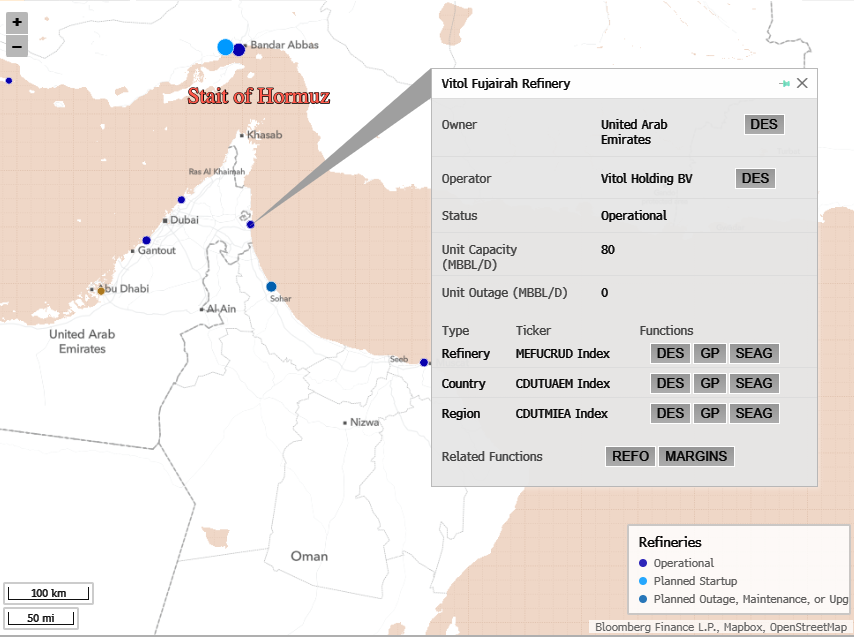
The energy hub hosts the Abu Dhabi Crude Oil Pipeline, which lets Abu Dhabi export crude directly to the Arabian Sea, and S&P Global says the port is linked to a 1.5 million b/d pipeline.
Footage circulating on X shows another incident earlier, this time at the Port of Salalah, of what appears to be an Iranian drone striking energy-related infrastructure.
🇴🇲 The moment an Iranian drone impacted the Port of Salalah in Oman pic.twitter.com/YUE7UXXT6J — Visegrád 24 (@visegrad24) March 3, 2026
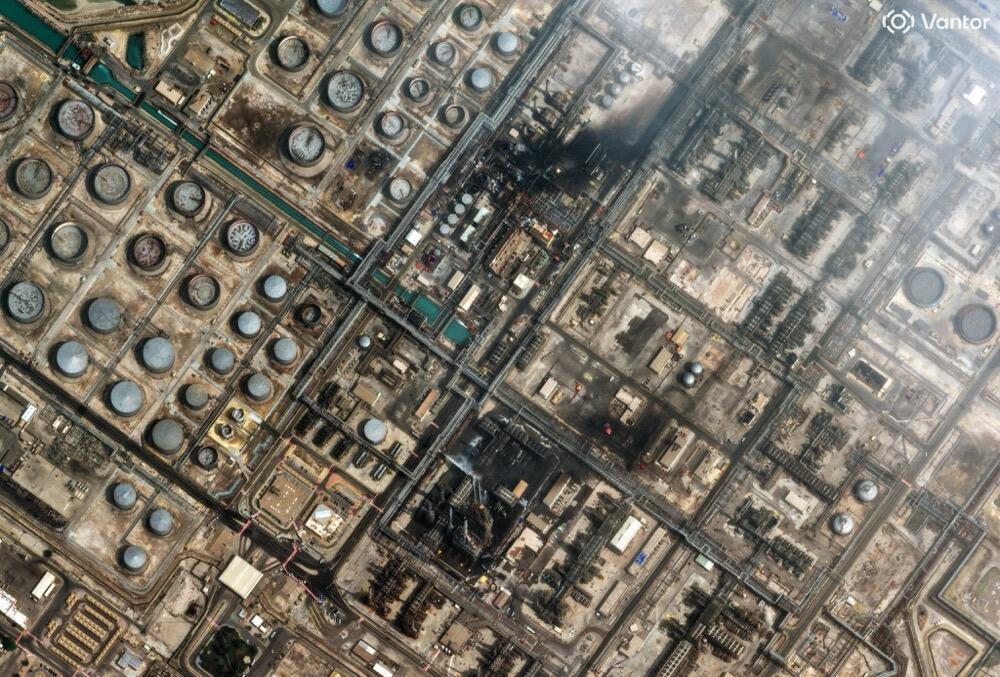
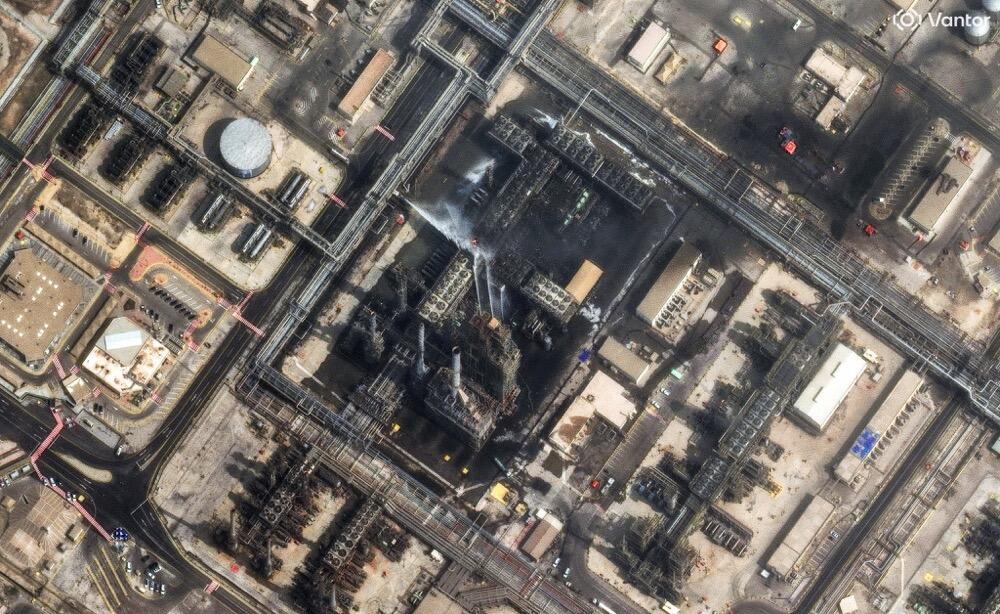
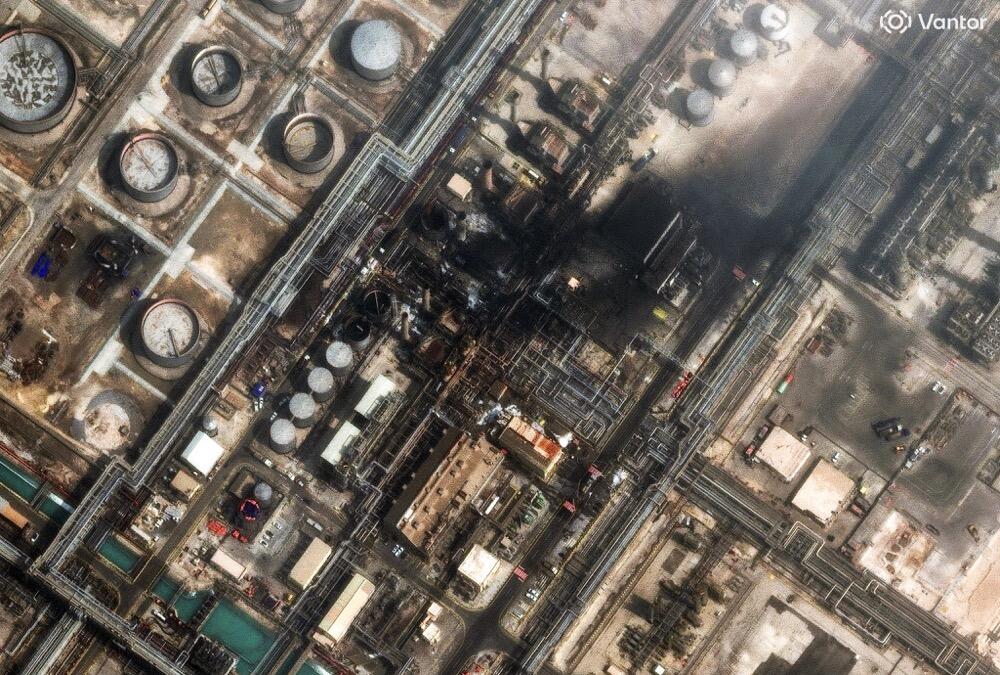
On Monday, a reported Iranian drone strike on Saudi Aramco’s Ras Tanura complex caused Saudi Arabia’s largest refinery to go offline.
GEOINT from spatial intelligence firm Vantor shows high-resolution satellite imagery of the aftermath:
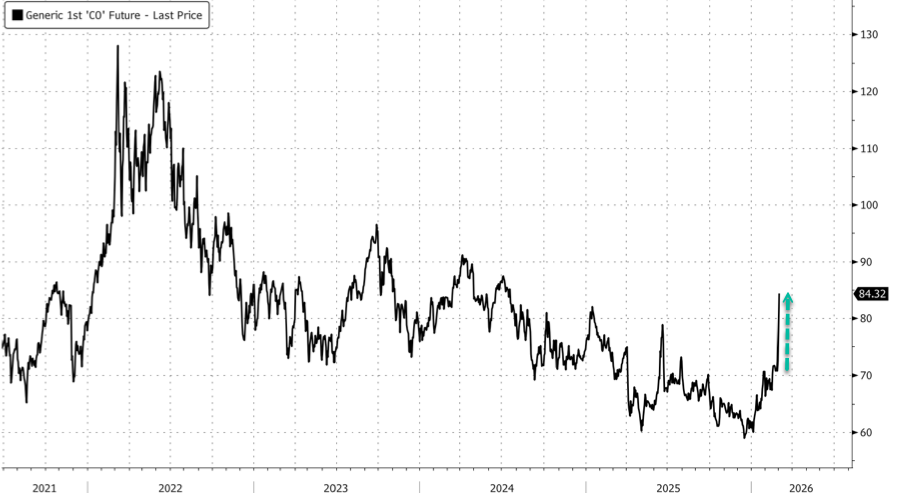
Meanwhile, Brent crude futures and European natural gas have spiked as the world’s most critical maritime energy chokepoint, the Strait of Hormuz, remains paralyzed, with Iran’s Revolutionary Guards commander threatening fire and destruction to any ship that transits the narrow waterway.
As of 0630 ET, Brent crude futures are up 7.7% to nearly $84/bbl.
Beyond Iran targeting critical infrastructure, soft targets have also been hit, including skyscrapers, at least one data center, airports, and the list goes on across Gulf states. Bloomberg’s top commodities analyst warned that water desalination plants could be next (read report).