

Seems like an admission of guilt to me, and probably a drop in the bucket to what they made, not to mention all the people still being poisoned as it’s in our food supply. And this is to settle current and future claims… And their new ingredient is supposed to be even more poisonous.
https://thelibertydaily.com/bayers-monsanto-proposes-7-25-billion-deal-settle/
By Andrew Moran
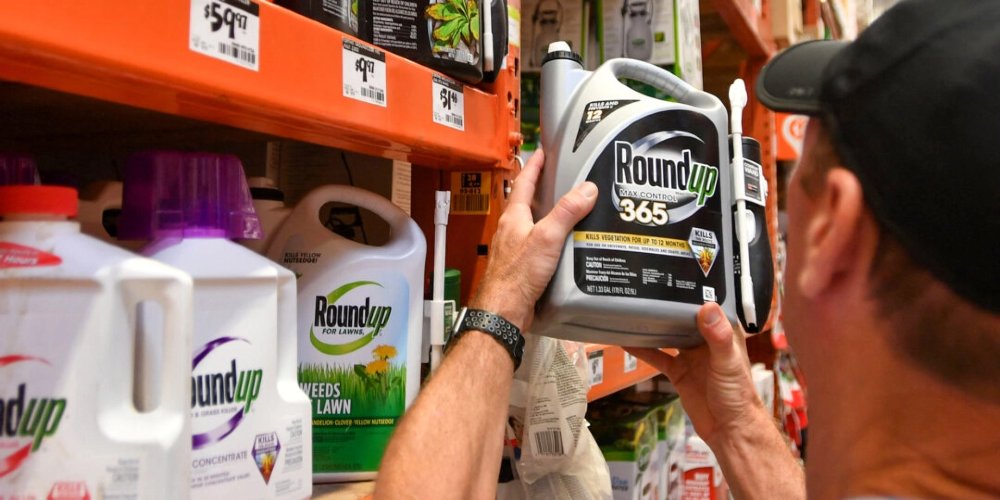
(The Epoch Times)—German-based agrochemical company Bayer said on Feb. 17 that its Monsanto subsidiary has submitted a proposed $7.25 billion class‑action settlement over thousands of Roundup cancer lawsuits.
Bayer stated that it would implement a long-term claims program funded by capped annual payments for up to 21 years, “following court approval.” It will be submitted to the Circuit Court of the City of St. Louis.
The settlement is aimed at resolving current and future claims alleging that Monsanto’s Roundup weedkiller causes non-Hodgkin lymphoma and other cancers.
Financing would originate from a combination of senior bonds and an $8 billion bank loan.
The proposal, says Bill Anderson, CEO of Bayer, will provide “an essential path out of the litigation uncertainty and enables us to devote our full attention to furthering the innovations that lie at the core of our mission: Health for all, hunger for none.”
Bayer stated that the settlement is not an admission of wrongdoing or liability but rather a decision to contain the litigation.
Shares of Bayer surged more than 7 percent to finish the Feb. 17 trading session. It was the top performer on Germany’s blue-chip DAX index.
The stock has rallied almost 30 percent this year.
Supreme Court Case
This decision coincides with the Supreme Court’s decision last month to hear a Roundup case in April. That instance involved Bayer appealing against an award of $1.25 million to a Missouri man claiming that Roundup was responsible for his blood cancer.
A ruling could restrict or eliminate state‑level failure‑to‑warn claims if the high court determines that its label—approved by the Environmental Protection Agency—pre‑empts any additional state‑mandated warnings.
Still, the company said its proposal will work in tandem with the high court’s review.
“This litigation and the resulting cost underscore the need for guidance from the Supreme Court on clear regulation in American agriculture,” Anderson said. “The class settlement and Supreme Court case are both necessary to help bring the strongest, most certain and most timely containment to this litigation.”
Since its acquisition of Roundup producer Monsanto in 2018, Bayer has spent more than $10 billion settling thousands of cases connected to the product.
Company officials say they will continue pursuing regulatory certainty to limit litigation risks.
“Regulatory uncertainty jeopardizes the availability of current and future agricultural innovations, with potentially severe consequences for farmers and the American food system,” Bayer said in a news release.
Glyphosate Controversy
The controversy centers on glyphosate, an active ingredient in Roundup. This is a ubiquitous herbicide used to control broadleaf weeds and grasses and has been registered as a pesticide in the United States since 1974.
Bayer stated that research shows that glyphosate-based herbicides are crucial tools farmers use to produce affordable food and “can be used safely and not carcinogenic.”
The International Agency for Research on Cancer—part of the World Health Organization—has considered glyphosate “probably carcinogenic to humans,” based on “limited” evidence of cancer in humans.
The U.S. Environmental Protection Agency (EPA) disagreed with the global agency and concluded that glyphosate is “not likely to be carcinogenic to humans.”
“EPA’s database includes studies submitted to support registration of glyphosate and studies EPA identified in the open literature,” the federal agency says on its website.
“For instance, IARC only considered eight animal carcinogenicity studies while EPA used 15 acceptable carcinogenicity studies. EPA does not agree with IARC’s conclusion that glyphosate is ‘probably carcinogenic to humans.’”
In the May 2025 72-page “MAHA Report: Make Our Children Healthy Again,” the administration stated that today’s children suffer more from behavioral disorders and chronic diseases than previous generations, pointing specifically to their diets.
Authors singled out glyphosate as one of the contributing factors, noting that it was part of a broader “cumulative load of chemicals” that led to adverse long-term health effects.
“A selection of research studies on a herbicide (glyphosate) have noted a range of possible health effects, ranging from reproductive and developmental disorders as well as cancers, liver inflammation and metabolic disturbances,” the report stated.