

Interesting developments for neighbors to seize territory if the government of Iran collapses.
https://southfront.press/turkey-is-plotting-to-grab-iranian-territories-if-u-s-attacks/
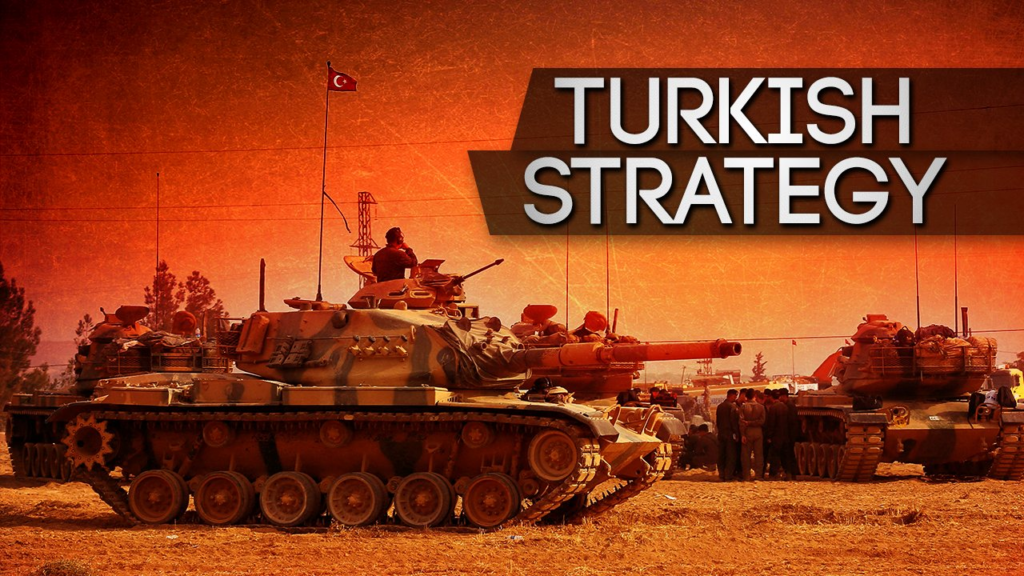
Turkey is planning to establish a buffer zone on the Iranian side of the border if a worst-case scenario unfolds and the government in Tehran collapses, the Middle East Eye (MEE) reported on January 27.
The United States has been escalating against Iran since the start of the month over a wave of violent protests, and President Donald Trump who ordered the deployment of additional military assets to the Middle East, is reported to be considering serious military operations including a naval blockade and assassinations.
Turkey has been supportive of Iran, with President Recep Tayyip Erdogan even rejecting any foreign intervention in the Islamic Republic, but the latest report by MEE indicates that Ankara is preparing for the worst.
According to the news outlet, top Turkish foreign ministry officials on January 22 briefed lawmakers in a closed-door meeting at parliament, telling them that the country is preparing for several potential scenarios with regard to Iran.
One participant in the briefing told MEE that Turkish officials used the term “buffer zone” to describe Ankara’s intention to do everything possible to prevent another wave of refugees entering the country.
Another told the outlet, however, that the officials did not explicitly use the phrase “buffer zone”, though they expressed a willingness to go beyond the usual measures.
“Essentially, they said they believe everything possible should be done on the Iranian side to ensure that those who might come in the event of a migration remain there,” the second source said.
At the start of the escalation, the Turkish Ministry of National Defense announced that it had strengthened security along its 560-kilometer border with Iran through a technologically enhanced physical barrier system. The system includes 203 electro‑optical towers and 43 elevator‑equipped towers, a 380-kilometer modular concrete wall, and 553-kilometer of defensive ditches.
The Turkish plan revealed by MEE mimics what the country did [with] Iraq then Syria, where it established so-called “buffer zones” under the pretext of stopping immigration and countering the Kurdistan Workers’ Party, which Ankara considers a terrorist group, in addition to ISIS.
Even if the government in Tehran collapses as a result of some U.S. attack, or a larger wave of protests, Turkey will not be able to establish a “buffer zone” in western Iran without a fight.
Kurds have a significant presence along the border line with Turkey, and they are guaranteed to resist. The majority of population in the Iranian Azerbaijan region is, however, made up of Azerbaijanis, who, being a Turkic ethnic group, could cooperate with Ankara. In fact, some Azerbaijanis joined the last wave of protests, which shows that not everyone there is pleased with the current situation.
The demographic makeup of Iranian Azerbaijan shows that Turkey may be worried more about Iranian Kurds establishing their own state, then illegal immigration. This was exactly what Turkey was worried about when it began to conduct operations in Iraq, and later in Syria.
It is highly unlikely that Turkey would withdraw after any intervention, even if a new government is established in Tehran. It also should be assumed that not just Turkey, but also Azerbaijan, would attempt to annex parts of western Iran, where some oil and gas fields are located, while the country is at its weakest.
MEE report will likely trigger a serious reaction from Iran. The Islamic Republic should, however, see it as a warning of what could happen.
The collapse of the government in Tehran could mark the end of the entire country in its current border, and even those who are currently showing support like Turkey, are likely preparing to capitalize on any intervention by the U.S. or Israel. If no agreement is reached with Washington, Iran will have no other option to survive as a country but to win the war, and quickly.