

They’re really pushing selfies for facial recognition data, and I don’t trust them to not be uploading this to a government server, as big tech is an arm of the state. And of interest, look at how two red states, Florida and Texas, are pushing ID checks for social media pretty hard. Both political parties desire to usher in complete and total internet identification and censorship. It’s definitely time to move to opensource operating systems you control, e.g. Linux for PCs, LineageOS for smartphones… And don’t let their AI have access to your machines, as you don’t know what data it’s storing or including in its knowledge base.
https://reclaimthenet.org/apple-supports-digital-id-push-with-facial-age-estimation
Once age checks live at the system level, every new mandate gets an easier ride.
By Ken Macon
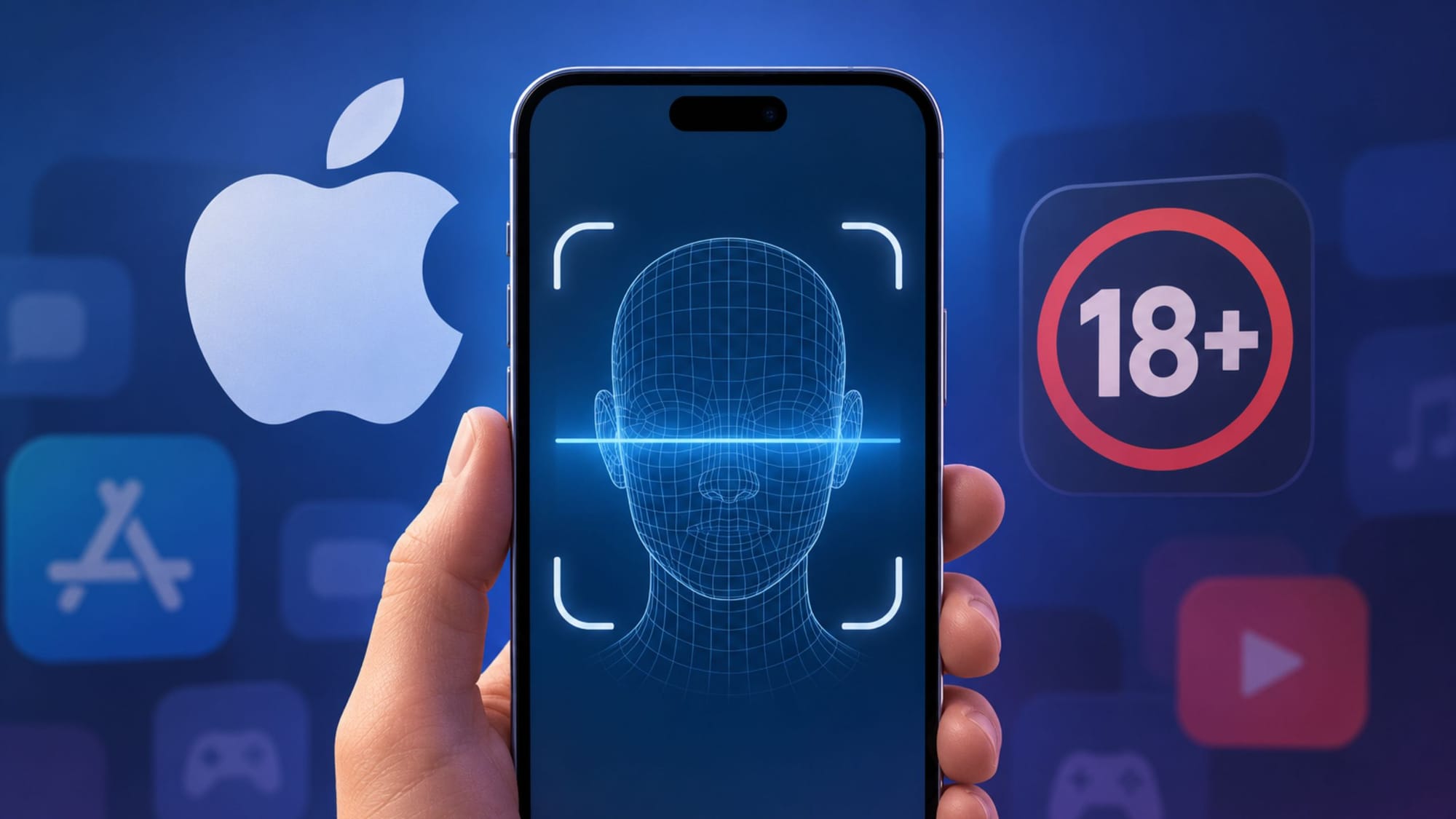
Apple is increasing its support of the digital ID age verification agenda and has released iOS 27.2, bringing a new way for Apple to verify your age: by scanning your face with an “age-estimation model” that will be fed by a selfie.
This is one of the ways in which Apple will check the age of its users, and it applies, as the company’s support page states, “Where required by law.”
The legal requirements that make this necessary in the US apply in Texas, and elsewhere in the world in Australia, Brazil, Singapore, South Korea, and the UK. The iOS update that introduces the new method of age verification was released on October 26.
Apple will ask for age verification when you create an Apple Account, “update the software on your device, try to change certain safety settings, or try to download or purchase apps with an age rating of 18+.”
In Australia, Brazil, Singapore, and the UK, the selfie option is available, while in other places, Apple will ask for a credit card, a scan of an ID, or look at information associated with an Apple Account.
Apple’s explains that the selfie option works by letting the user “Capture all four angles of your face by moving your head slowly right, left, up, and down.” To increase the likelihood of the scan being successful, the company advises users to “Remove anything that might cover your face, such as masks, hats, or sunglasses” and to “Make sure only your face is in the frame.”
The models that will be used to estimate age from these selfies will run “both on-device and on Private Cloud Compute,” Apple says, referring to a service it provides that “extends the security and privacy of your Apple device into the cloud.” The results will then be “combined on your device.”
Apple promises that the selfie “isn’t accessible to anyone, not even Apple,” and that “Once your age is confirmed, your selfie is deleted and isn’t retained in any form.”
Apple has not revealed the accuracy of the age-estimation model, what happens when it misidentifies an adult as a minor, or what record of the result is kept by the company. Those who are not verified as at least 18 by the model are advised to either try another selfie or use another method.
The other methods Apple will use to determine age are: looking at information associated with the user’s account, such as whether they have a credit card on file or how long they have had their Apple Account; and scanning an ID. The image of the ID is “kept for a short period of time to complete this process, after which it’s deleted,” Apple says, and adds that “Debit cards and gift cards aren’t supported.”
In case the user is under 18, Apple says that “In some cases, certain actions might not be available until you turn 18.” And if they refuse to provide age verification, they can still “continue to use your device,” but “you need to confirm before you can turn off certain safety settings or download apps that are rated 18+.” Once the verification is complete, “You don’t have to confirm again.”
In Texas, the rules apply to new Apple Accounts created in the state on or after June 4, 2026. There, under 18s must be in a Family Sharing group, and “Ask to Buy and some Screen Time features are automatically turned on if you’re under 18” and cannot be switched off “even by parents or guardians.”
In addition, “For all accounts, your age range is always shared with developers and can’t be turned off.”
As for the law that is behind all this in Texas, Apple previously fought it, describing it as requiring the company to collect “sensitive personal identifying information for every Texan who wants to download an app.” The law stayed in force after the Supreme Court declined to block it on July 6.
Other states have followed suit: Louisiana’s version of the law becomes effective on July 1, 2027, while Alabama’s goes even further, requiring every existing account in the state to be age-verified by October 1, 2027.
Meanwhile, Apple executive chairman Tim Cook has since welcomed the EU KIDS Act, which puts app stores and operating systems in its scope, saying that “We’re very encouraged that the EU KIDS Act proposed by the (European) Commission has helped trigger a constructive conversation around this critical issue in Europe.”
Meta now asks Facebook users for a video selfie in order to get a “verified” badge, but has not said how long it keeps the videos.
Google’s model in Canada sends those it misjudges as minors to verify their age with an ID or a selfie.
Reddit’s age checks in Europe go through a third-party service called Persona, which, according to researchers, puts users through 269 separate verification checks.
The promise that the selfie is not stored “in any form” may or may not be sincere, but it is also irrelevant to the real issue at hand: that a face scan is becoming the price of either owning or using a device. Once the age gate is put in the operating system, every law that wants to introduce an age gate will have one ready to use.