

People were wondering what the big bug would be with the new Apple Duos, and this might be the answer. Per JerryRigEverything these inside screens will cost $1,000 to replace if not warrantied. And these flexible screens scratch at level fingernail, so not really built for the long haul to begin with.
https://nerds.xyz/2026/10/apple-iphone-duo-screens-cracking-ai-hinge/
By Brian Fagioli
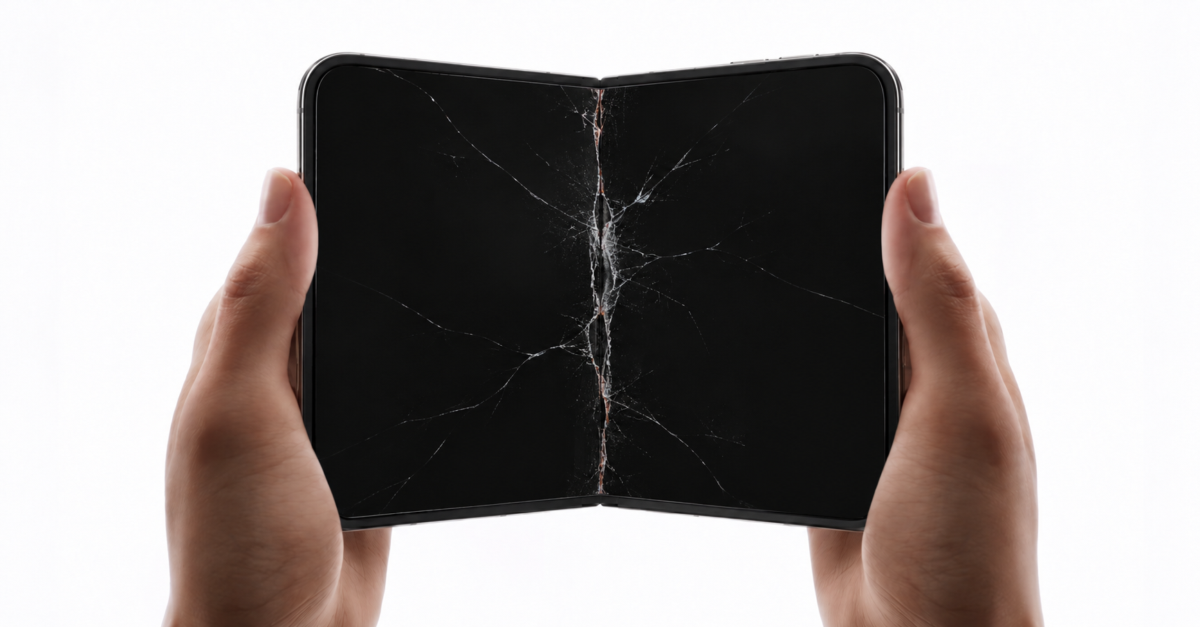
Apple used artificial intelligence to help manufacture the iPhone Duo’s precision hinge. Now, early reports of screens cracking along the fold are raising an uncomfortable question about how much that precision means once the phone reaches customers.
As I covered in September, Apple’s manufacturing process uses AI algorithms to match individual hinges with the best-fitting housings. Laser scanning and microscopic layers of added material help address remaining variations. It sounds impressive, but the reported failures are a reminder that sophisticated manufacturing does not guarantee a reliable finished product.
One iPhone Duo owner on Reddit said their display cracked after about six hours of ownership and fewer than 20 openings. They described feeling something beneath the screen near the hinge before hearing a crack as they opened the phone. According to the owner, Apple replaced the device at a store that evening.
The subreddit’s moderators said they reviewed additional photos and Apple documentation supporting the damaged device and replacement. They also explicitly noted that they could not independently establish what caused the damage. That makes the report more substantial than an unexplained image, while leaving the central engineering question unanswered.
Other users have collected pictures showing similar damage around the folding display’s crease. Those similarities deserve investigation, although reposted photographs and overlapping coverage make it difficult to determine how many separate devices are affected. There is no verified failure rate in these reports.
If these phones failed during ordinary use as their owners describe, then Apple’s manufacturing and testing process, AI included, did not prevent those failures from reaching customers. That does not establish that AI caused the problem or that an algorithm overlooked a known defect. It does make the earlier emphasis on manufacturing precision feel less reassuring.
There is also a difference between using AI to match components and using it to identify every possible failure. Apple’s description of its manufacturing process does not establish that the algorithms could predict the damage owners are reporting. We should not pretend to know what happened inside a system we cannot inspect.
Still, Apple chose to highlight the technology involved in making the hinge. It is fair to examine the results with the same enthusiasm that accompanied the explanation. An impressive manufacturing story should invite scrutiny when customers report that the finished hardware broke almost immediately.
The Verge reported that Apple had not responded to its request for comment at publication. The company needs to establish whether these reports involve isolated faulty units or a broader weakness, then explain what affected owners can expect.
Replacing a broken phone promptly is the right response, and the Reddit owner credited Apple for doing exactly that. But a quick replacement does not answer why a new device reportedly failed before its owner had even finished signing into their apps.
I can appreciate the engineering involved and still expect a phone to survive being opened. Buyers should not have to care whether a human, an algorithm, or some combination of the two fitted the hinge. They should be able to trust it.