

This is mainly a big city problem, as not workable in other locations. Consequently, I’m not one to use delivery services as I don’t trust the people delivering them as some look methed up, and I don’t trust my food to stay secure in one of these robots either. And as we found with Flock and some other ALPR cameras, data is being shared and uploaded to other government databases, so do we trust what these companies say?
https://futurism.com/robots-and-machines/delivery-robots-database-flock
Et tu, ramen messenger?
By Maggie Harrison Dupré
For all the controversy they’ve caught this year, Flock cameras only collect and store license plate data from passing vehicles.
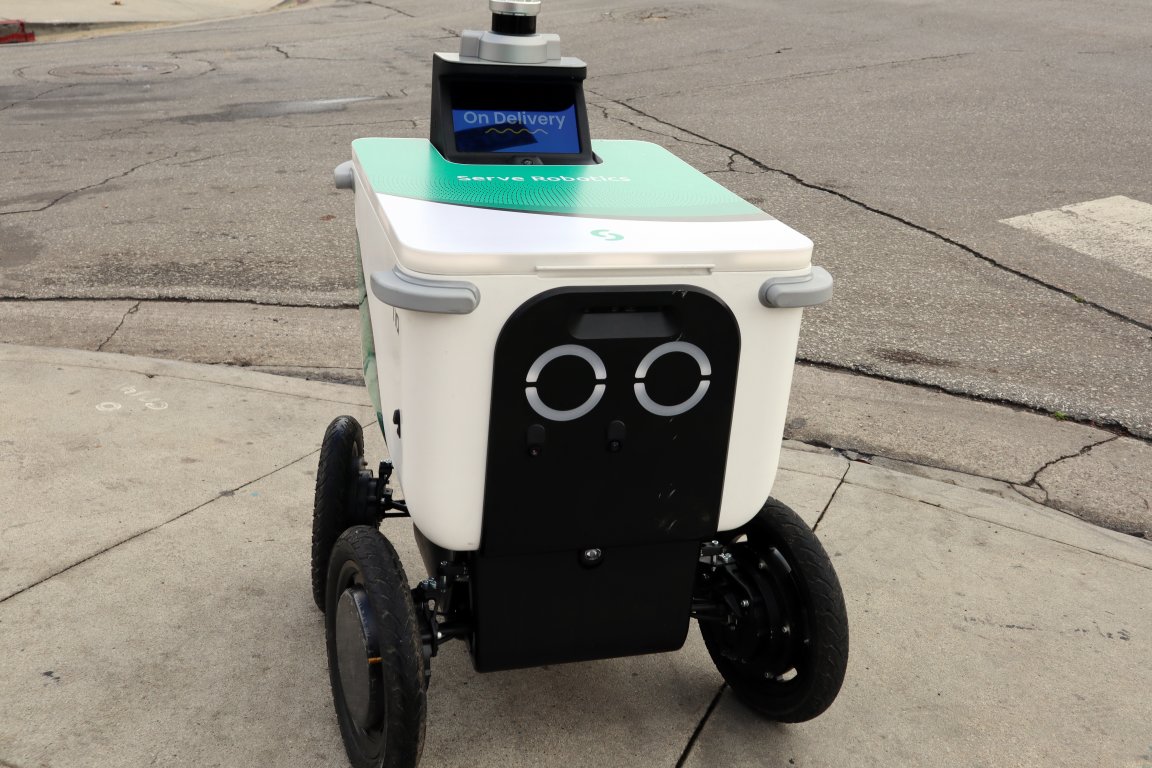
But the WALL-E-esque delivery robots now trundling through America’s cities are bristling with cameras and sensors that help them navigate the bustling world around them as they make their way to customers’ doorsteps — and according to a pair of new lawsuits, you might be coughing up sensitive data in exchange for your dinner.
According to reporting by the Associated Press, delivery robot companies Coco Robotics and Serve Robotics have been hit with similar lawsuits from Chicago residents claiming that their bots are illegally collecting sensitive biometric data.
The lawsuits claim that the robots have used embedded cameras and LIDAR sensors to record information about Chicago residents’ hands, bodies, and faces as they approach their deliveries. In both cases, the plaintiffs allege that they didn’t request or consent to a robot delivery. Because they didn’t ask for a robot delivery, they argue, they certainly didn’t consent to being recorded or their data being collected by the delivery machines.
The plaintiff in the case against Coco further also alleges that a remote human operator watched his delivery as it happened. The plaintiff in the case against Serve, meanwhile, claims that the delivery robot he encountered collected and retained his data as he collected his Uber Eats order. His lawsuit also raises the concern that the data could be used to train AI or handed to third parties.
Both companies have disputed the claims. Coco, saying that privacy is a top priority, told the AP that the litigation against it is “frivolous,” and that “this lawsuit fundamentally misunderstands our technology, we have not collected biometric data in Chicago.”
“The data we share is navigational data used to make sidewalks safer for all users,” Coco told the AP. “For example, we provide real-time sidewalk hazard information to BlindSquare, a navigation app built for people who are blind or have low vision. We do not share data from the beginning or end of delivery trips under our data sharing partnerships. Privacy and compliance with the law are top priorities in everything we do.”
Serve, for its part, told the AP that it plans to “defend against” the legal action.
“Serve does not use that data to identify individuals and our systems are not designed to identify individuals or create biometric profiles,” Serve’s statement continued, per the report.
Illinois has uniquely strong laws against the nonconsensual collection of biometric data, so it’s not surprising to see cases like these brought in Chicago. As Gizmodo notes, Chicago has also seen a surge of the delivery bots over the past few years, causing frustration and annoyance among many in the city.
Regardless of how the cases shake out, the fact remains: the more automated our lives are, the more likely it is that sensitive information — about our lives and behaviors, and even our bodies — is going to be swallowed up, stored somewhere, and used in ways that we have no control over.