

The US is problematic for getting in digital ID, but they’re working on it. And the Mark of the Beast system is inevitable, but we can push it out until after the Rapture at least.
https://reclaimthenet.org/rand-paul-blocks-kosa-fast-track-approval
For a measure framed as child protection, KOSA spends an intriguing amount of time imagining an identity system.
By Dan Frieth
A Republican senator has blocked an attempt to ram a bill through the US Senate that is designed to usher in age verification across the internet, but this time, without a vote.
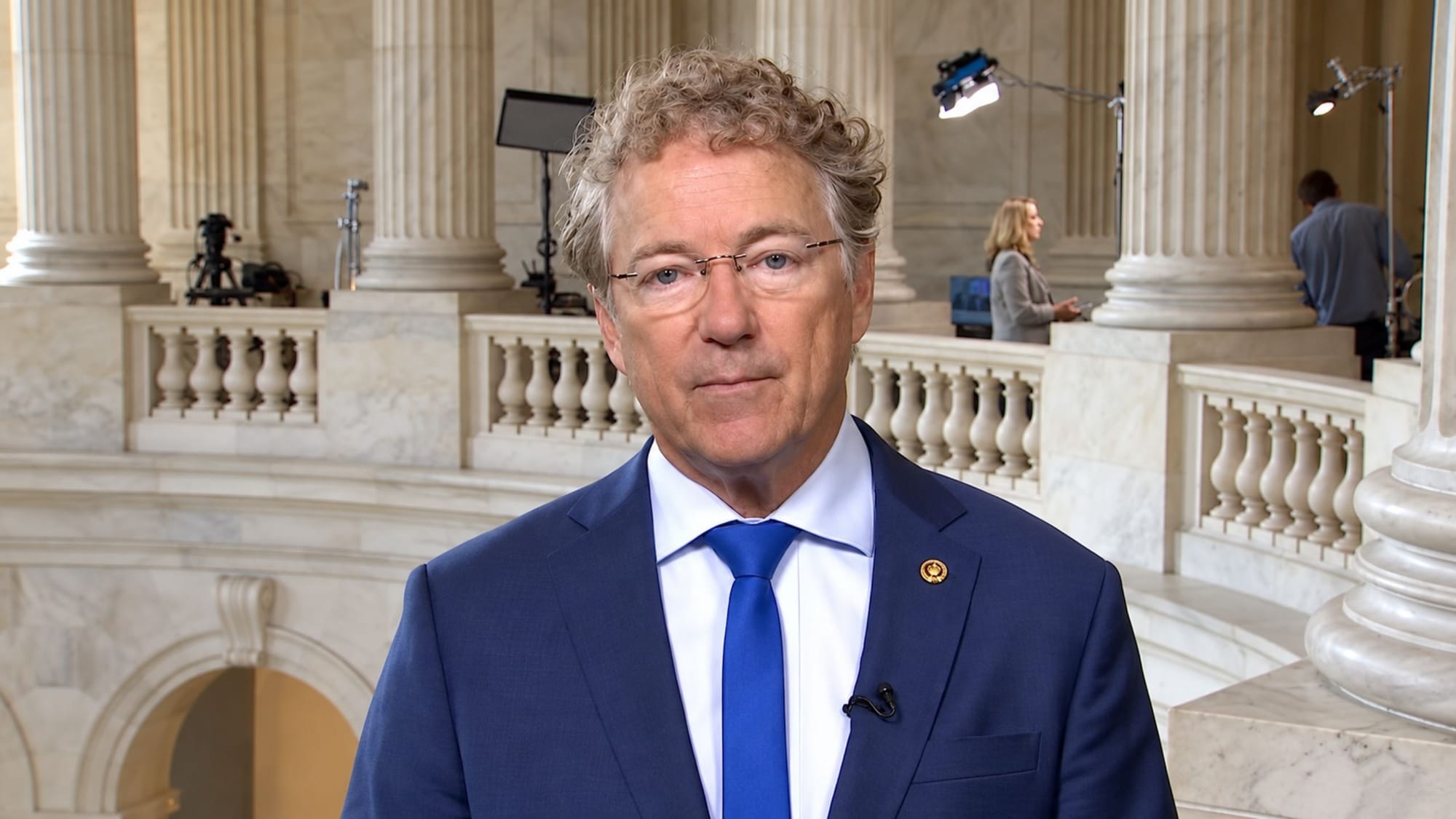
The objection came from Senator Rand Paul of Kentucky, who on Wednesday stopped a unanimous consent request from Democrats and Republicans, Richard Blumenthal of Connecticut and Marsha Blackburn of Tennessee, to pass the bill, known as the Kids Online Safety Act (KOSA).
This was the fourth time in as many years that lawmakers tried to push through KOSA. The previous time it passed the Senate but was blocked in the House of Representatives by Republicans who saw it as dangerous for free speech and another tool to censor the internet.
The bill, S. 1748, was cleared by the Senate Commerce Committee last month, and the attempt to fast track it followed.
Paul’s objection means the Senate will not be able to pass the bill without a proper vote.
While the report doesn’t go into the reasons behind the senator’s move, KOSA is seen by its critics as one of several current attempts to bring in digital ID and online age verification in the US, a move that is being promoted as a way to protect children, but is viewed as a slippery slope that will eventually affect all internet users.
What KOSA does is establish a “duty of care” for platforms that would have to “exercise reasonable care in the creation and implementation of any design feature to prevent and mitigate the following harms to minors where a reasonable and prudent person would agree that such harms were reasonably foreseeable by the covered platform and would agree that the design feature is a contributing factor to such harms.”
The listed harms range from eating disorders and substance abuse, to “patterns of use that indicate compulsive usage.”
While the bill doesn’t explicitly mandate age verification, it does instruct the Federal Trade Commission (FTC) to “rely on competent and reliable evidence, taking into account the totality of the circumstances, including whether a reasonable and prudent person under the circumstances would have known that the user is a minor.”
In other words, companies will be held liable for not guessing correctly that a user is a minor.
If they want to make sure they’re not held liable, they will have to check the age of all their users.
The bill also instructs the FTC to clarify what it means to “know” a minor is using a service, and the agency has 18 months to come up with that definition.
Meanwhile, the bill denies that it requires age verification, but only in the sense that it doesn’t mandate “the affirmative collection of any personal data with respect to the age of users that a covered platform is not already collecting in the normal course of business.”
In a part of the bill that is not getting much attention, the Secretary of Commerce is ordered to conduct a study, along with the Federal Communications Commission (FCC) and the FTC, “evaluating the most technologically feasible methods and options for developing systems to verify age at the device or operating system level.”
The study will have to consider what data would be needed to build such a system, how accurate it would be, and whether it would require changes to hardware and software, including on devices that are already in use.
The report is due a year after the bill becomes law.
The House version of KOSA, meanwhile, passed as part of a package bill, H.R. 7757, which also includes the SCREEN Act, the SAFE BOTs Act, COPPA 2.0, and the SPY Kids Act.
It passed on June 29 by 267 votes to 117, under a suspension of the rules. The House bill does not have the “duty of care” provision, but it does require age verification for every user.
In the past, KOSA had been opposed by Big Tech, but this year Meta dropped its opposition once the Senate paired the bill with a federal ban on state laws regulating AI, and a national digital ID push.
Meta now supports KOSA, as do Microsoft, Apple, X, Snap, and Pinterest.
The argument that age verification is a form of digital ID and that its purpose is to track people online is not new. It is based on the fact that most age verification systems require a government-issued ID, a face scan, or enough behavioral data to build a profile that can identify a person.
Although the Senate bill does not explicitly demand age verification, it is hard to see how the duty of care provision would work without it. And while the House version does not have that provision, it does require platforms to verify age.
This means that either way, platforms will be under pressure to introduce identity checks for all users. The difference is in the method. The Senate bill would have them guess users’ ages and be liable if they get it wrong, while the House version would have them ask for ID.