

(Headline article below) This is really looking like a deliberate hack on the hardware users by the cofounder, possibly both founders, as why the switch to a new in house library really? And why hide your identity on the library that hid the fallback from hardware random number generation? Is the CTO a government asset, as the timing is incredibly suspect as well. And was the inclusion of dice rolls for the hardcore Bitcoiners so they wouldn’t get scammed in this possible retirement attack? We’ll know what’s up by how seriously Canada and the world investigates this crime, and how they follow through with arrests and prosecutions. However, it could be the perfect crime, until they try to move and launder the stolen coins. Moreover, I’ll throw out one more possibility, they engineered this in such a way to hit normal people while certain whales were steered to dice rolls for entropy, randomness, multisig… so as to limit high wealth individuals or organizations who would send people to retrieve their money or worse? Even if investigations go no where, I wouldn’t want to the Coinkite cofounders who will now need to be very concerned about their personal security and safety, indefinitely. Consequently, I’d be interested in a thorough audit of the hardware and firmware to see if anything else is lurking, or if everything was buttoned up except for this one vulnerability, as that might be the smoking gun…
Key Takeaways
- Peter Gray linked to Coldcard vulnerability causing $114 million theft across four attack waves starting July 30, 2026.
- Vulnerability traces to March 1, 2021 commit replacing hardware RNG with software RNG, resulting in low entropy seeds.
- Approximately 1,816 Bitcoin stolen from 5,200 addresses across four coordinated attacks by August 3, 2026.
Bitcoin developer James O’Beirne published an analysis on August 4 stating that Coinkite co-founder and CTO Peter Gray was linked to the code behind the hack that resulted in $114 million in losses for Coldcard. O’Beirne discovered and reported the vulnerability while auditing Coldcard firmware in 2025, but Gray dismissed the report.
58 Switck Commits Contain Valid Signatures Made with Peter Gray’s Personal Key
In an analysis published by James O’Beirne on August 4, 2026, he presented cryptographic evidence based on GPG commit signatures: the anonymous account “Switck” published the problematic libngu library on GitHub, and 58 commits signed “Switck” contain valid signatures made with Gray’s personal key. The same key was also used to sign other commits by Gray under the name “Peter D. Gray” in the same codebase; the Switck account itself uploaded no keys.
O’Beirne stated that this cryptographic evidence showed that the two identities belonged to the same person. Coinkite has not yet responded to the identity claim.
O’Beirne’s analysis also cited findings by security firm Wizardsardine, which said that libngu was one of three repositories related to the vulnerability. Coldcard’s production firmware introduced libngu as a dependency.
Block Traces the Issue Back to a March 2021 Commit
Block’s Bitcoin engineering and security teams traced the vulnerability back to a March 1, 2021, commit that changed how Coldcard generated wallet seeds, replacing calls to the device’s hardware random number generator (hardware RNG) with calls to MicroPython’s software random number generator. The error was hidden in a single preprocessor check, and firmware version 4.0.0 was officially released with the flaw on March 17, 2021, where it remained undiscovered for five years.
Because the generated seeds had insufficient entropy, attackers could regenerate the seeds offline and steal funds without accessing any device. None of the theft incidents involved hardware theft, phishing, or malware.
Four Waves of Attacks Result in Cumulative Losses of Approximately $114 Million
The attacks occurred in multiple explosive waves beginning on July 30, 2026. The first wave occurred on July 30, stealing approximately 1,083 Bitcoin from 1,196 addresses within 41 minutes—about $70 million. Three more waves occurred over the following five days. Galaxy Research statistics showed that by the end of the fourth wave, in the early morning of August 3, approximately 1,816 Bitcoin had been stolen in total, more than 5,200 Bitcoin addresses had been affected, and total losses were approximately $114 million; some reports cited approximately $116 million. Coinkite said the vulnerability was still ongoing.
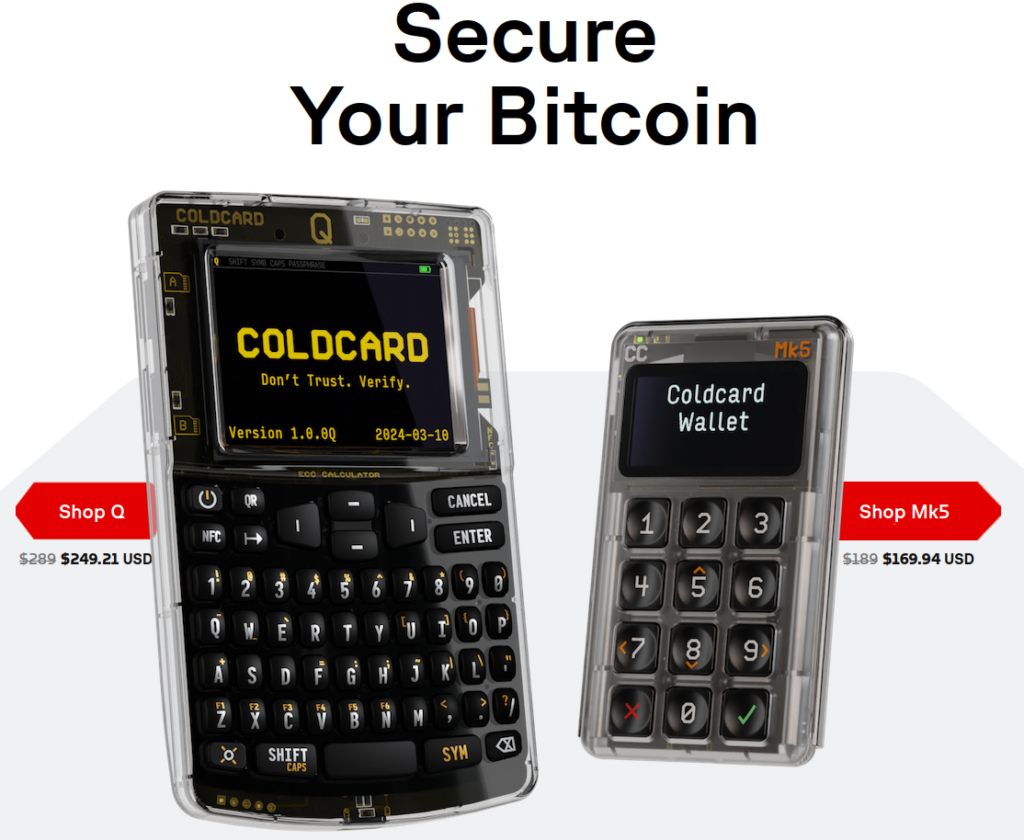
Affected Devices and Security Measures: Risk Assessment for Mk3, Mk4, Mk5, and Q
According to Coinkite’s announcement, the affected devices and recommended measures are as follows:
Mk3 (firmware version 4.0.1 or later): At risk; funds must be transferred immediately.
Mk4, Mk5, and Q (firmware below 5.6.0 or 1.5.0Q): Update the firmware, create a new seed phrase, and transfer cryptocurrency to a secure address.
Wallets created using the dice-roll function (users entered at least 50 actual dice rolls): No security issues have ever been observed; these wallets are considered safe.
Strong BIP-39 passphrases: Have passed security checks.
Multisignature setups (the Coldcard key is only one of multiple signers): Have passed security checks.
Ledger cybersecurity expert Vincent Bouzon said that this incident was “an implementation failure, not a verdict on self-custody,” adding that “entropy must be anchored in secure hardware.”
Frequently Asked Questions
How did James O’Beirne link the Coldcard vulnerability repository to Peter Gray?
According to O’Beirne’s analysis, published on August 4, 2026, 58 commits signed “Switck” contain valid signatures made with Gray’s personal GPG key. The same key was also used for Gray’s commits under the name “Peter D. Gray” in the same codebase; the Switck account itself uploaded no keys, providing cryptographic evidence that the two identities belonged to the same person.
What exactly was the Coldcard vulnerability?
According to Block’s analysis, the vulnerability originated in a March 1, 2021, commit that replaced calls to the hardware random number generator with calls to a software random number generator. The change was hidden in a single preprocessor check, and the generated seeds had insufficient entropy, allowing attackers to reconstruct private keys offline and steal funds without accessing the devices.
Is my Coldcard device affected?
According to Coinkite’s announcement, Mk3 devices running firmware version 4.0.1 or later are at risk, and funds must be transferred immediately. Mk4, Mk5, and Q devices running firmware below 5.6.0 or 1.5.0Q require a firmware update and a new seed phrase. Wallets created using the dice-roll function with at least 50 actual dice rolls, wallets protected by strong BIP-39 passphrases, and multisignature setups have all passed security checks.