

I wonder what is lurking behind this EO. The identifying account holders bit, I fear, falls inline with the rest of the age verification and digital ID shenanigans going on working us towards digital ID. And worth saying, blacks are underbanked because of the lawless hood mentality and not respecting financial accounts, having nothing to do with any racism. Lets just say that banks were suffering black fatigue long before the rest of us, and its just a drug addled ignorant and uneducated part of the black community with their victim mentality, not wanting to do for themselves… And It is probably a judgement from God, as you’ll hear many of this community talking about ancestor worship and other pagan religions. And the best example is how their communities devolve into lawless unsafe killing fields when they have governmental control, e.g. Chicago, Baltimore… I’m just tired of this woke talking point inferring racism when it’s really just a reaction to terrible behavior.
https://www.therage.co/trump-executive-order-expands-bank-secrecy-act/
Donald Trump has signed an Executive Order to expand the BSA that is likely to disproportionately affect naturalized citizens, green card holders, and low income households.
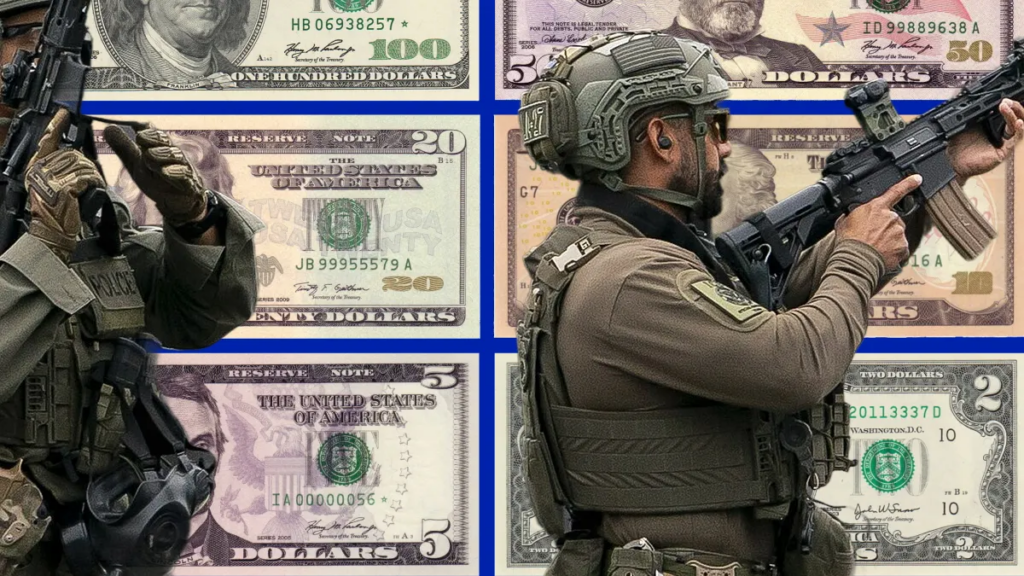
by L0la L33tz
Just two days before Congress is set to hold a hearing on the modernization of the Bank Secrecy Act (BSA), President Trump signed an Executive Order (EO) titled “Restoring Integrity To America’s Financial System” to “strengthen customer identification requirements for financial institutions” and “address the credit risks” allegedly posed by illegal immigrants.
The EO follows statements by Treasury Secretary Scott Bessent that banks should carefully review any accounts held by immigrants earlier this year, urging the government to pass citizenship checks for financial institutions.
The EO stands in stark contrast to Trump’s August EO meant to guarantee fair banking for all Americans.
Expanding the Bank Secrecy Act
While Donald Trump fights against the very financial institutions that used the BSA to debank him and his family following his first presidential term, he has now decided to expand the law, rather than reign it in. As the fact sheet accompanying the EO states:
“The Order directs the Secretary of the Treasury, in consultation with Federal financial regulators, to propose changes to Bank Secrecy Act regulations to strengthen customer due diligence requirements and the authority to obtain additional information when warranted, ensuring institutions can identify the true owners of accounts when necessary to assess risks related to unlawful activity,” and:
“The Order directs the Secretary of the Treasury and Federal financial regulators to consider changes to the Bank Secrecy Act to strengthen customer identification program requirements, including accounting for the risks that foreign consular identification cards pose to the U.S. financial system.”
The fact sheet claims that “gaps in customer identification practices have allowed terrorists, drug traffickers, money launderers, and other criminal networks to exploit U.S. financial institutions to move illicit funds and evade law enforcement,” but it is questionable whether it is truly a lack of information that leads to the US financial system being exploited by criminal actors.
As Cato Institute has found, out of 28.7 million reports filed under the BSA with the Financial Crimes Enforcement Network (FinCEN) in 2025, only 275 resulted in opened investigations. The problem does not appear to be the breadth of the collected information – but rather the usefulness of the information overall.
On Thursday, Cato Institute’s Nick Anthony will be testifying before Congress to address the inefficiency of the BSA in context of Congress’ plans for a potential modernization of the law.
Targeting Naturalized Citizens and Green Card Holders
The EO additionally aims to “restore banking integrity” by “ending the extension of credit to high-risk borrowers that American citizens are forced to subsidize.” This activity includes “extending mortgages, credit cards, and auto loans to illegal aliens who face potential removal or loss of wages creates structural credit risks that threaten the safety and soundness of the national banking system.”
The problem: it is not only “illegal aliens” which face “potential removal” or “loss of wages” anymore. Under recent orders from the Trump administration, the list also includes green card holders with unfavorable political beliefs, as well as naturalized citizens. Under newest guidance, the Office of Immigration Litigation has been asked to provide the administration with 100-200 denaturalization cases per month for potential removal, leaving banks to evaluate whether to grant services to legal immigrants or naturalized citizens under Trump’s BSA EO.
The EO further claims that “when banks are forced to absorb these elevated credit risks, the costs are passed on to American consumers in the form of higher fees and interest rates – restoring sound underwriting standards puts money back in the pockets of law-abiding Americans.”
This, however, is only half of the truth.
Increasing The Cost of Banking for All Americans
Most recent estimates place financial crime compliance costs for financial institutions in the US at $59 billion per year. This cost, in turn, gets directly rolled over to customers in the form of banking fees, which have been found to be a main driver for US Americans to not be able to access a bank account.
As a recent study by the FDIC has found, many low income households simply cannot afford to be banked in the US, with one-third of unbanked households in 2023 (33.4 percent) citing a reason related to fees or a minimum balance as the main reason for not having an account. Black households are disproportionately affected, being more than five times as likely to be unbanked, and more than twice as likely to be underbanked.
With the expansion of financial crime compliance as laid out in the EO, costs for compliance programs are likely to increase – in turn increasing the cost for all Americans, further limiting access to the banking system for underserved communities.