

This is interesting because Palantir’s homosexual Peter Thiel is involved in funding this start up (JD Vance also worked for Thiel who probably runs him). The virtual fencing idea is interesting, but how buggy will the hardware and software be? Especially in the day and age of vibe coding (AI), which I notice in phone apps already that are developing too fast and not quite fully functional. The quality of software is going to become a problem, or more so then it already was. And you have to wonder if the appeal of the project is for the coming human brain implants to use the similar technology.
Halter has raised $220 million as it milks its cow-focused AI technology.
BY CHLOE AIELLO
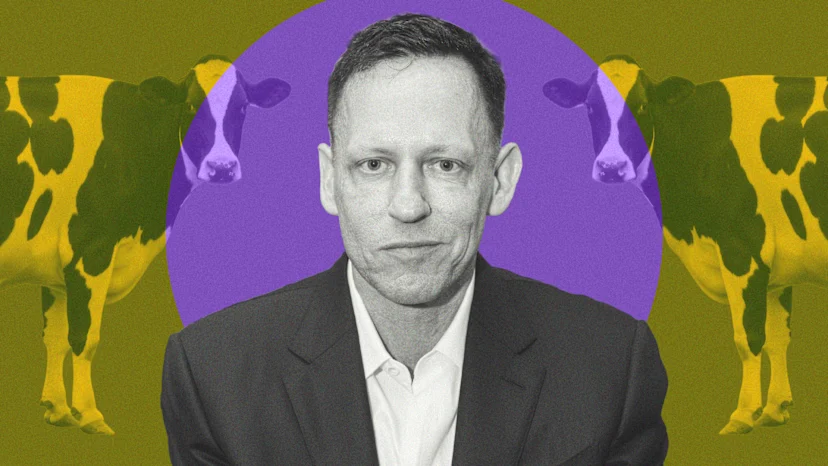
A New Zealand-based agtech unicorn has raised $220 million to expand its smart collar and “Cowgorithm” technology into new and existing markets.
Halter is now valued at $2 billion following the Series E, which was led by Peter Thiel’s Founders Fund with participation from Blackbird, DCVC, Bond, Bessemer, and several others, according to the Wednesday announcement. Halter plans to use the funding to expand its existing footprint in the U.S., Australia, and New Zealand, as well as to grow into new markets such as Ireland, the U.K., and parts of North and South America. The round is one of the biggest to-date in the industry, and comes amid growing adoption of the technology among U.S. ranchers. According to Halter, U.S. ranchers have erected some 60,000 miles of virtual fencing since the company’s launch in 2024.
Halter’s technology works through a system of solar-powered collars and in-pasture towers that collect data—some 6,000 data points per collar per minute—from grazing cattle and feed it into a cloud-based platform and app for farmers. The collars are ergonomically designed to be comfortable for the cattle wearing them, and leverage AI to play audio cues or vibrate when it is time to move to a different grazing location or if they step outside of a predetermined zone. The collars can also deliver an electric pulse if an animal does not respond.
“Agriculture is a multitrillion-dollar industry that feeds the world, yet remains one of the least digitized sectors on earth,” Founders Fund partner Amin Mirzadegan said in a statement. “Halter is changing that by bringing software, sensors, and AI directly into livestock operations in a way that ranchers actually adopt.”
Halter’s app also creates a digital twin of a ranch, which essentially means a digital replica that leverages real-time data to accurately reflect conditions. Farmers can consult the app to check on their herd, or fence, and move cattle with just a few clicks. Halter also has a proprietary algorithm that it calls a “Cowgorithm” trained on seven billion hours of animal behavior. Altogether, this technology is meant to make ranchers’ lives easier when herding cattle, help them save money on building physical fencing, and provide insights about pasture management to improve soil health and pasture productivity. Halter says some 2,000 farmers and ranchers currently use its tech worldwide.
“We started Halter because we believed technology could fundamentally change what it means to run a ranch, and enable ranchers to use innovation to build long-term futures on their land,” Halter CEO and founder Craig Piggott said in a statement.
Ag-tech is a sector that is ripe for innovation from AI, and Halter isn’t alone in seeing opportunity.
Davis, California-based InnerPlant has raised $53 million from a mix of VC firms and actual farmers to scale its biosensor technology that turns soybean plants into fluorescent warning signs of early fungal infection. Like Halter, it relies not only on data collection and algorithms but also on physical infrastructure in the field.