

It seems the US is catching up with their hypersonic missiles. Now that Russia and China have their own supersonic and hypersonic missiles, and given the US and Israel’s problems intercepting some missiles from Iran with better guidance systems, helped by someone, how vulnerable is the US military to these new weapons, especially naval vessels and carriers.
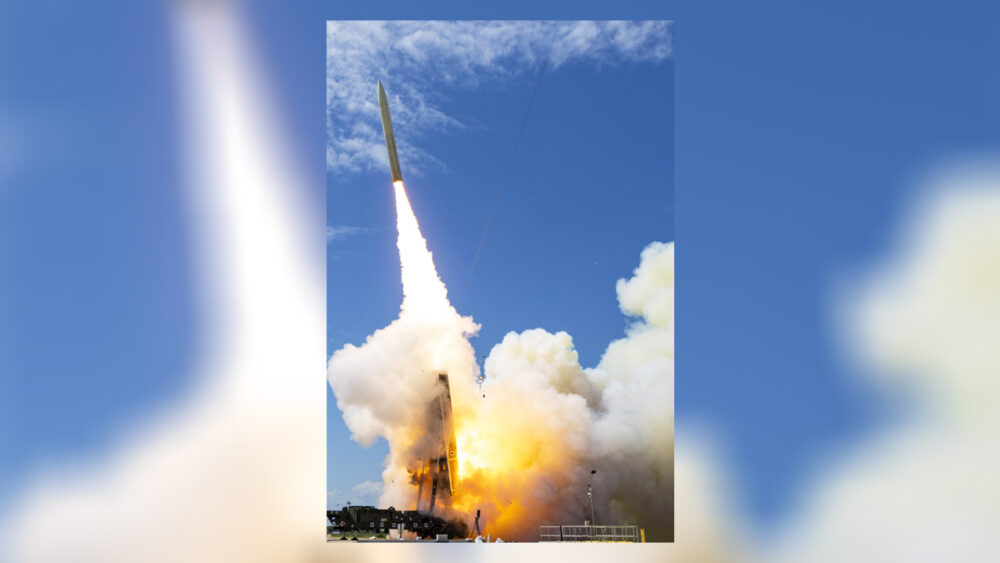
The U.S. Army and Navy conducted a successful test of a common hypersonic missile on March 26 at Cape Canaveral Space Force Station in Florida, advancing a key priority identified by defense officials to accelerate the development of next-generation battlefield capabilities.
According to a Department of War press release on April 2, the joint test supports efforts to deploy hypersonic weapons across both land- and sea-based platforms.
These systems are designed to travel at speeds exceeding Mach 5 and strike heavily defended or time-sensitive targets.
The test aligns with a broader Pentagon strategy to rapidly field advanced technologies for near-term use in combat operations.
As previously reported by The Dallas Express, defense officials identified hypersonic weapons as one of six critical technology areas necessary to maintain battlefield advantage.
“Our adversaries are moving fast, but we will move faster,” Under Secretary of War for Research and Engineering Emil Michael said when announcing the initiative. “The warfighter is not asking for results tomorrow; they need them today.”
Michael added, “These six Critical Technology Areas are not just priorities; they are imperatives. The American warfighter will wield the most advanced technology to maximize lethality. This is how the War Department wins wars.”
The hypersonic test reflects that urgency, as military leaders work to transition emerging technologies from development into operational use.
Hypersonic weapons differ from traditional missiles by combining extreme speed with maneuverability, making them more difficult to detect and intercept.
The push to expand these capabilities also places increased pressure on the U.S. defense supply chain.
As previously reported by The Dallas Express, the federal government has invested in domestic production of critical minerals such as gallium and scandium, which are used in missile defense systems and hypersonic weapons. A $29.9 million award supported the development of a production facility, including work tied to Cedar Park, Texas.
Defense officials have framed such investments as necessary to reduce reliance on foreign sources and strengthen national security.
The Army and Navy’s continued testing signals a broader effort to accelerate deployment timelines, reduce costs, and ensure the United States maintains a technological edge in future conflicts.