

There are a lot of personal nodes distributed around the world, so I doubt the secondary conclusion about a directed attack at hosting providers. And really, anyone interested in using Bitcoin should have their own node to verify the transactions for themselves, as well as protecting their privacy. For instance my nodes use I2P and Tor, and recently one node had an issue with Tor which required me to refresh its keys and get a new hidden service address, so some nefarious nodes on the Tor network were working to deanonymize hidden services. Of course, unknown if this was academic research or a government contractor. Consequently, I do notice some issues with Tor while browsing, even with me running my own bridge with obfuscation. And the Tor devs are slow to act on fixing a couple ways Tor can be attacked at the moment to identify hidden services, which might point to government actors.
By Mark Tyson
Cambridge scientists have completed the first longitudinal study of the cryptocurrency’s resilience.

Cambridge scientists have completed the first longitudinal study of Bitcoin’s resilience to network infrastructure disruption, with a particular eye on submarine data cable incidents (PDF paper). The conclusion is that “Bitcoin is highly resilient to random cable failures,” with the scientists saying that between 72% and 92% of the world’s submarine cables would need to be severed simultaneously to result in significant mode disconnection. Nevertheless, the research team observed that Bitcoin could be very vulnerable to targeted attacks.
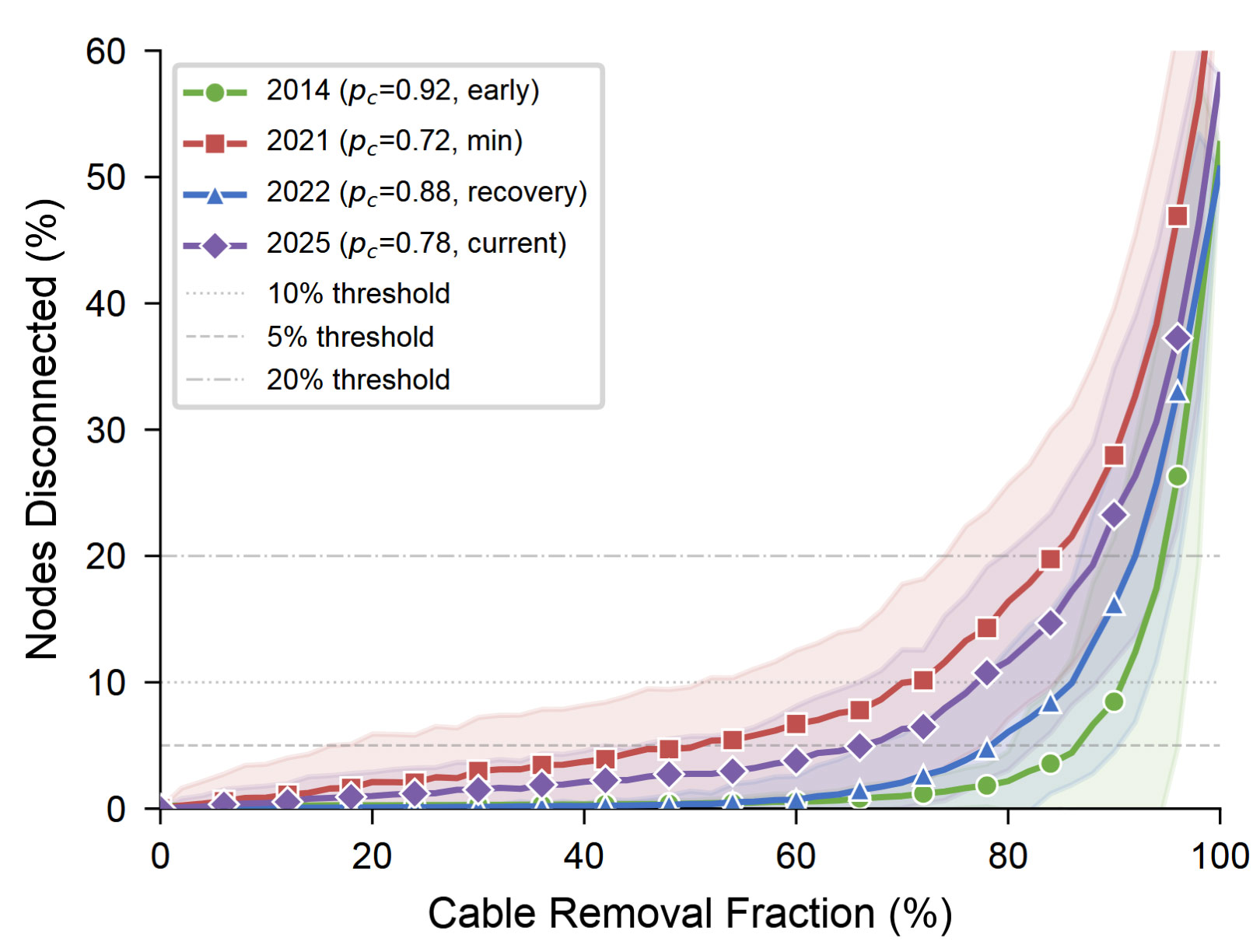
The study took data from 11 years of P2P network traffic and measured the impacts of 68 verified cable fault events (though Bitcoin has been a thing since 2009). As hinted at in the intro, there is a stark contrast between the impacts of ‘random’ cable failure events and what could happen if someone were intent on disrupting this iconic cryptocurrency.
Central to the resiliency report is the application of a Buldyrev‑style cascade model to the data. This helps assess real-world systems full of interdependencies: things like computer networks, power grids, and transportation systems.Article continues below You may like
Using this math, the Cambridge scientists reckon Bitcoin’s failure threshold for random failures is between 72% and 92%. It is also observed that the adoption of the Tor protocol has proven to be a barrier to disruption. “Bitcoin’s shift to Tor represents a self-organized response to regulatory pressure that simultaneously enhances infrastructure resilience, where censorship resistance and physical robustness are complementary rather than competing properties,” say the Cambridge scientists in their conclusion.
As for targeted attacks on the network, that’s a different story. Bitcoin is “far more vulnerable to targeted attacks,” note the researchers. A malicious actor targeting just five of the largest routing domains (Hetzner, OVH, Comcast, Amazon, and Google Cloud) would cripple the Bitcoin network.
Image 1 of 2
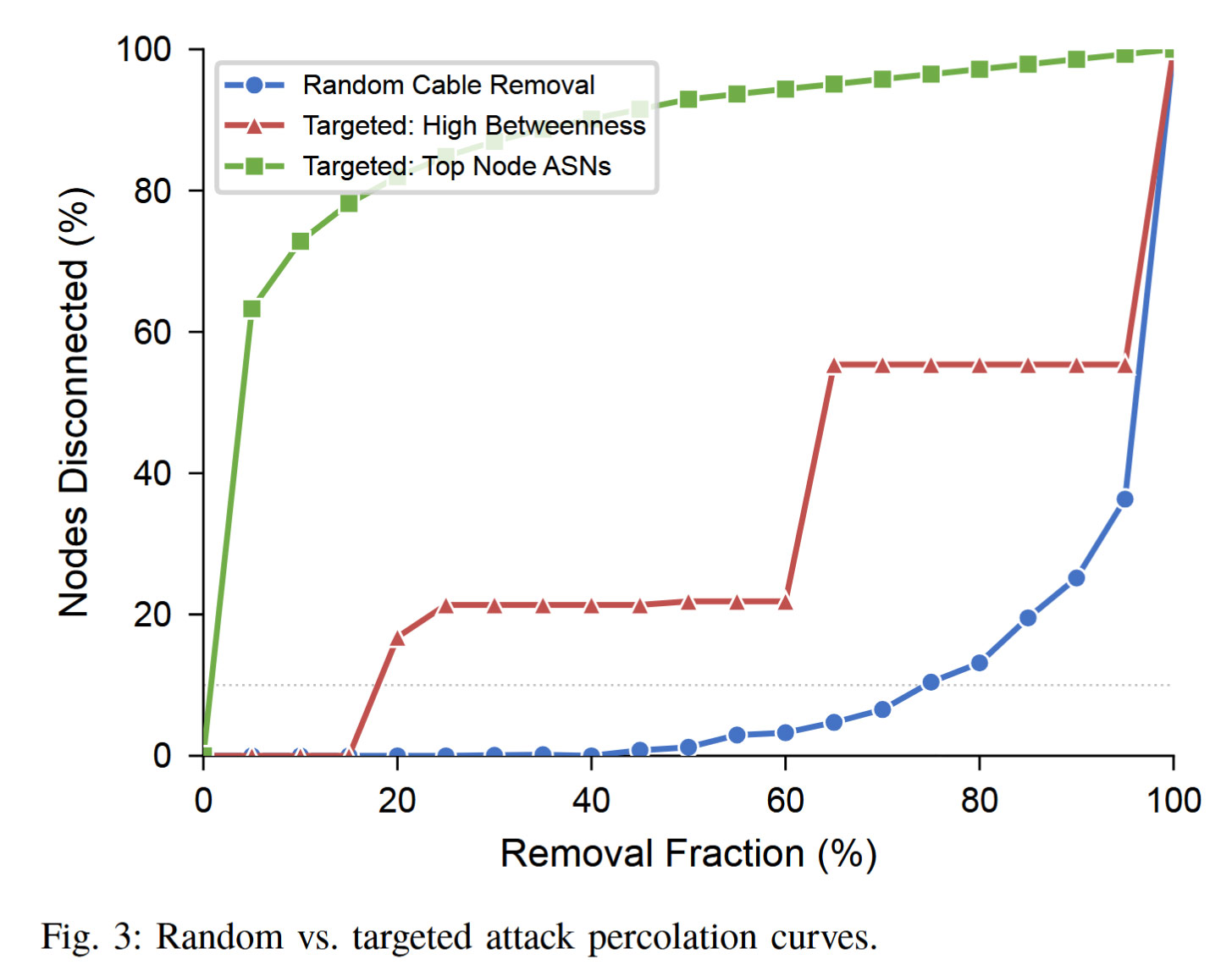
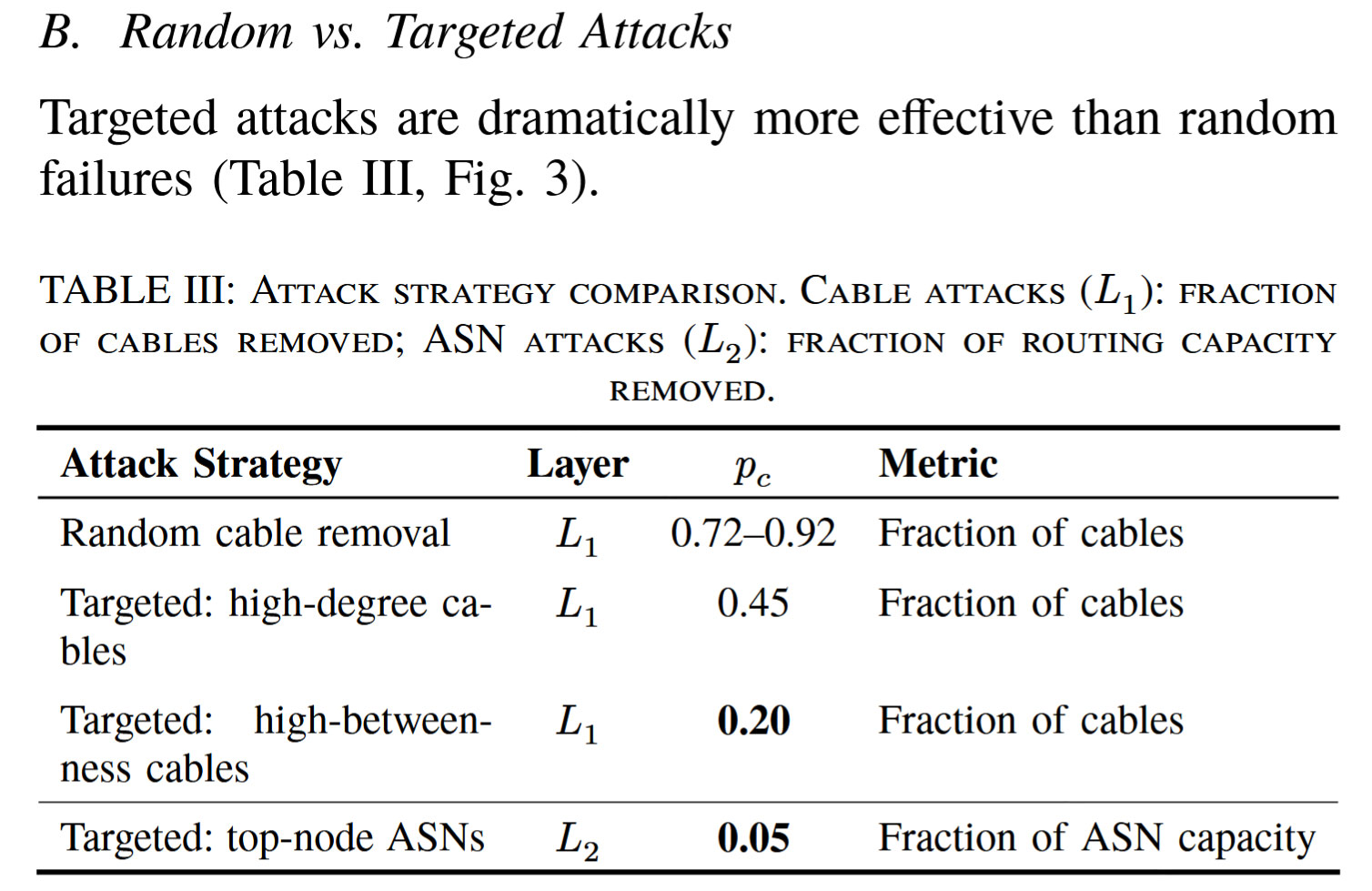
Overall, the study conclusions are quite positive for cryptocurrency fans. However, the resiliency of the networks that crypto needs to be maintained is under more pressure than ever before, with cables in the Baltic, waters around the Middle East, and the Taiwan Strait all attracting unwelcome disruptions in recent months.