

Who helped Iran with their guidance systems? As they’ve been pretty accurate hitting targets when their weapons aren’t intercepted. Of course, allies will need to buy new versions of these radars and possibly backups, so a lot of money to be made by the military industrial complex beyond replacing interceptors. Does this serve China to get the US to use up their weapons and move assets, creating a window to take Taiwan? Has this all been negotiated in a backroom already? Consequently, China did fly aircraft over towards Taiwan and move naval assets towards them as well, like a fake in fighting to get the response from the opponent.
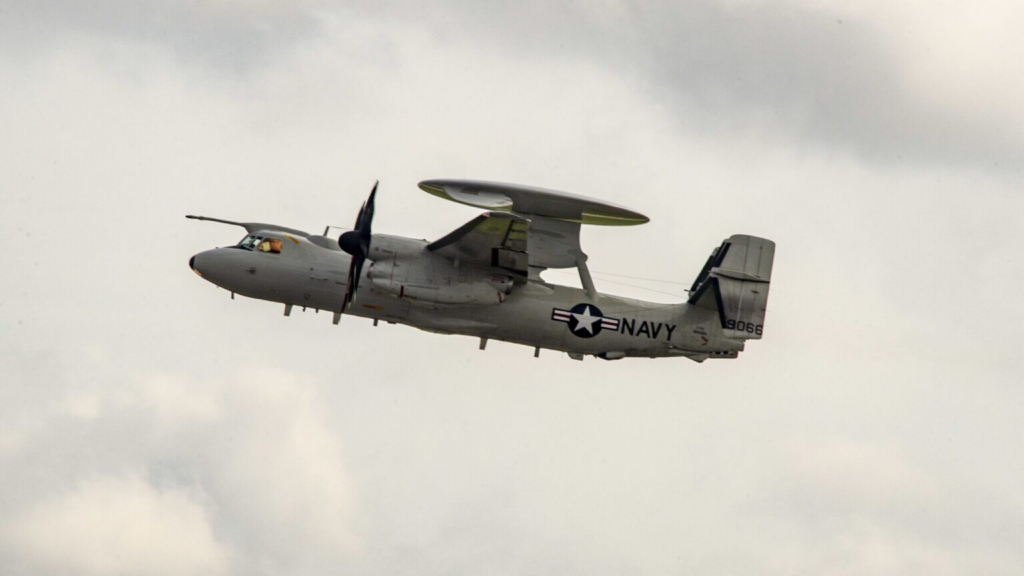
The United States has reinforcing its military presence in the Middle East by deploying additional E-2D Hawkeye airborne early warning (AEW) aircraft after losing multiple long-range radars to Iranian retaliatory strikes.
The E-2D all-weather, carrier-capable, tactical AEW aircraft is equipped with the AN/APY-9 active electronically scanned array (AESA) radar, which reportedly has a range of 648 kilometers, in addition to several command and control systems. The aircraft can be especially effective against lying targets, like suicide drones and cruise missiles.
According to open source aviation data, four Hawkeyes departed Bangor Air National Guard Base in Maine on March 16, then crossed the Atlantic Ocean on their way to the Middle East.
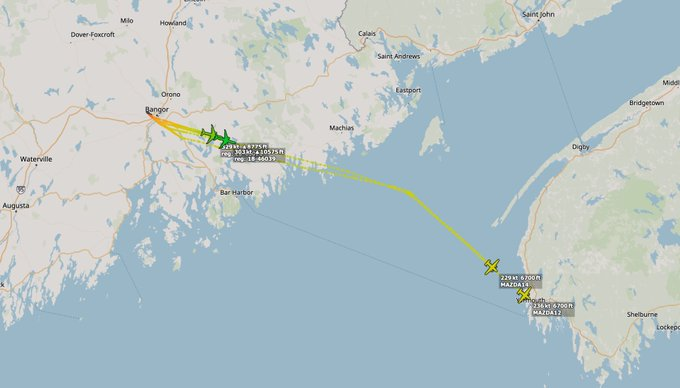
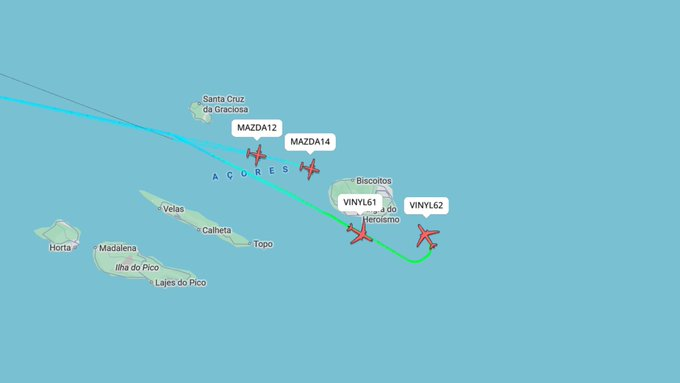
The aircraft were likely sent to make up for the recent loss of multiple long-range radars across the region, which degraded the early warning capabilities of the U.S. and its allies.
The losses reportedly included up to four AN/TPY-2 very high-altitude radars. The radars were deployed at Muwaffaq Salti Air Base in Jordan, Prince Sultan Air Base in Saudi Arabia, and in two sites near Abu Dhabi in the United Arab Emirates as a part of four separate Terminal High Altitude Area Defense (THAAD) systems.
Two of the radars were Emirate, while the other two are said to be American. Radars of this type are reported to have a detection range of 1,000 to 3,000 kilometers.
An AN/FPS-132 AESA radar site near Al Udeid Air Base in Qatar was also destroyed. The high-power, solid-state phased-array radar is used for long-range early warning of ballistic missile attacks and space surveillance. It has a range of up to 5,000 kilometers. The radar in question is owned and operated by Qatar.
In addition to these losses, the destruction of multiple MIM-104 Patriot long-range air defense systems with their AN/MPQ-53, -65, or -65A radars was reported, although this is yet to be confirmed.
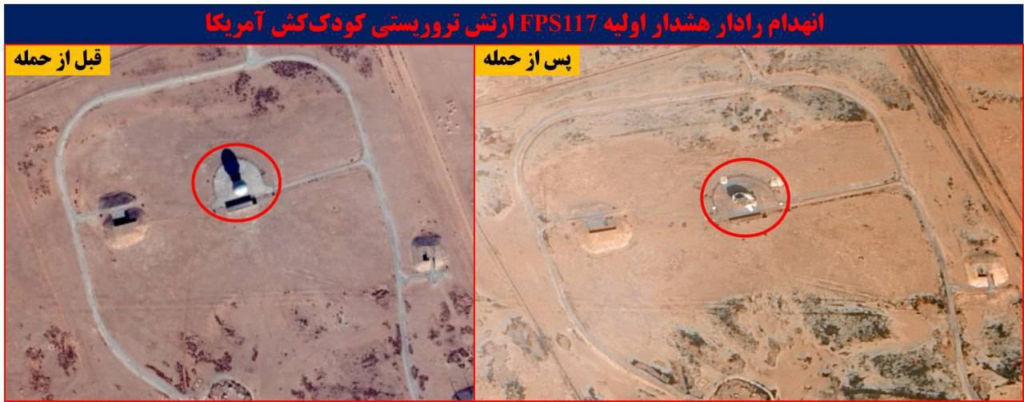
Recent satellite images shared by Iranian media also revealed that an AN/FPS-117 3-dimensional air search radar was destroyed at King Khaled Air Base in Saudi Arabia. The AESA radar is reported to have a range of 470 kilometers.
While the deployment of additional E-2Ds could close some of the gaps created by Iranian retaliatory strikes, coverage will not recover fully, especially when it comes to the detection of ballistic missiles.
The U.S. is reported to be rushing additional THAAD and Patriot systems to the Middle East, mainly from South Korea, to address this issue. However, as the war drags on, there are no guarantees that the Islamic Republic won’t be able to target these new systems, or even hit the Hawkeyes on the ground.