

This is encouraging as it seems they’ve elected a conservative over a communist by quite a margin. I’ve always liked Chile and kept an eye on them if we needed to escape America. Under the two terms of Obama I thought it could become necessary, but then the OCGFC always throw us conservatives a bone with a more reasonable puppet, and Trump is actually a member of the Owners and Controllers of Global Financialized Capital.
https://yournews.com/2025/12/14/5384686/kast-sweeps-to-power-as-chile-turns-sharply-right-in/
By Emmanuel Ogbonna
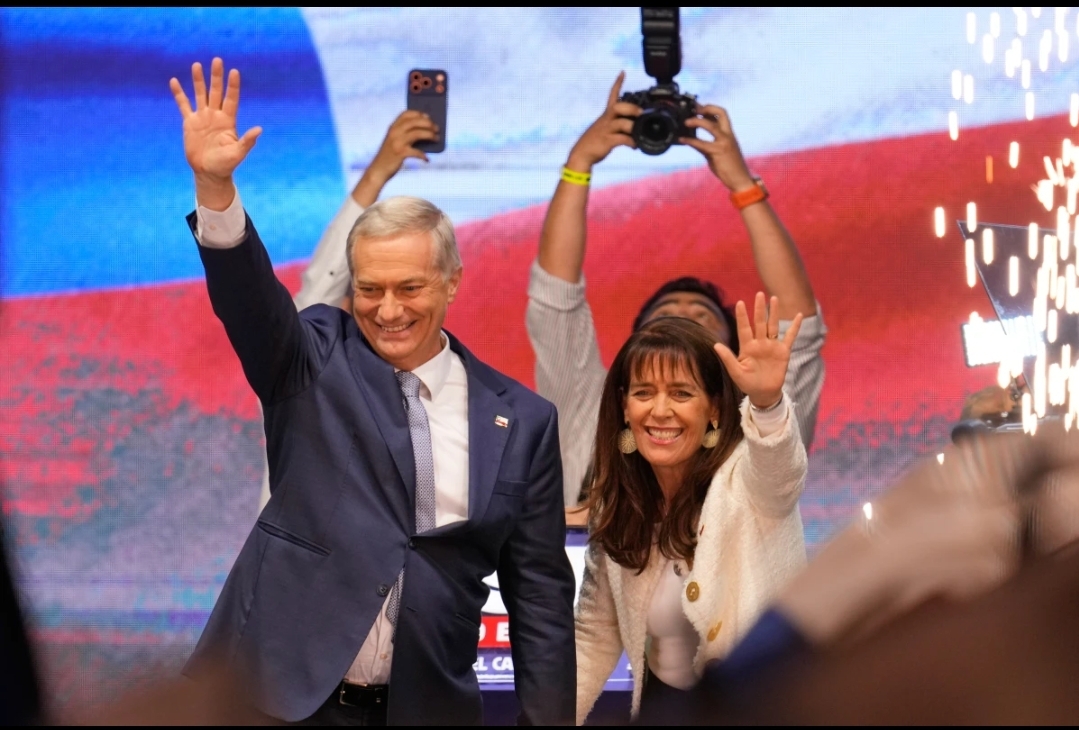
Chile’s ultra-conservative former lawmaker José Antonio Kast scored a decisive and unexpected victory in Sunday’s presidential election, defeating the candidate of the governing center-left coalition and ushering in the most right-wing administration the country has seen since the return to democracy more than three decades ago.
With nearly all ballots counted, Kast captured 58.2% of the vote, a commanding margin that reflected widespread voter frustration over rising crime, illegal immigration and a slowing economy. His opponent, Jeannette Jara, a communist and former labor minister in President Gabriel Boric’s government, finished with 41.8%. Once it became clear that Kast’s lead was insurmountable, Jara phoned him to concede and publicly congratulated him on his victory.
Celebrations quickly spilled into the streets of Santiago and other cities, where Kast’s supporters waved flags, honked car horns and chanted his name. The election authority declared Kast the winner less than two hours after polls closed, underscoring the scale of his triumph in a deeply polarized runoff.
In a message posted after conceding, Jara acknowledged the result and urged her supporters to remain engaged in public life. Speaking later to backers gathered in a central square of the capital, she struck a reflective tone, encouraging them not to be discouraged by the loss. She said defeats often offer the greatest lessons and stressed the importance of defending social gains achieved in recent years.
Kast’s campaign team responded cautiously to the victory, emphasizing the gravity of the task ahead. His spokesman, Arturo Squella, said the incoming administration was acutely aware of the responsibility it now bears to address what he described as multiple crises confronting the country, from public security to economic stagnation.
The election outcome places Chile squarely within a broader regional shift, as voters across Latin America have increasingly turned against incumbent governments and embraced candidates promising tough, often ideologically stark solutions. In recent years, elections from Argentina to Bolivia have elevated right-wing or anti-establishment figures, reflecting widespread anger over inflation, crime and political dysfunction.
The international response was swift. Washington was among the first capitals to congratulate Kast, signaling an eagerness to work with his government. In a statement, U.S. Secretary of State Marco Rubio said the United States was confident Chile would advance shared priorities under Kast’s leadership, including strengthening public security, curbing illegal immigration and revitalizing trade ties. He added that Washington looked forward to deepening cooperation and promoting prosperity across the hemisphere.
Domestically, Kast’s victory marks a profound turning point. He will become Chile’s first openly radical right-wing president since the end of Gen. Augusto Pinochet’s military dictatorship in 1990. Since the restoration of democracy, power has largely alternated between moderate coalitions on the center-left and center-right, producing relative political stability and economic growth. Sunday’s result signals a sharp break from that tradition.
The stark contrast between the two finalists defined the campaign. Jara, a lifelong member of the Communist Party, rose to prominence through her role in expanding labor protections and social welfare programs under Boric’s administration. She comes from a working-class family that opposed the Pinochet dictatorship and framed her candidacy as a continuation of efforts to build a more equitable society through an active state.
Kast, by contrast, ran on a platform centered on law and order, free-market economics and social conservatism. A devout Catholic and father of nine, he has long been a polarizing figure in Chilean politics. His father, who emigrated from Germany, was a registered member of the Nazi Party, and one of Kast’s brothers served as a minister during the military regime, family ties that have drawn intense scrutiny and criticism over the years.
In previous presidential bids, Kast’s uncompromising opposition to abortion in all circumstances and his rejection of same-sex marriage alienated many voters in a country that has grown more socially liberal. This time, however, his message resonated more strongly as concerns about security dominated the public debate. Chile has experienced a surge in organized crime, drug trafficking and violent offenses, along with a sharp increase in undocumented migration, developments that have unsettled a society long regarded as one of the safest and most stable in the region.
Kast capitalized on those anxieties, promising aggressive policing, mass deportations of migrants without legal status and a rollback of what he described as excessive regulation stifling economic growth. His coalition drew support from business leaders attracted by his pro-market stance, middle-class families alarmed by carjackings and robberies, and far-right activists nostalgic for the authoritarian past.
Late Sunday, as supporters gathered to await his victory speech, some young backers were seen holding framed photographs of Pinochet, an image that underscored both the depth of Chile’s political divisions and the symbolic weight of the election result.
As Kast prepares to take office, he inherits a country sharply split over its future direction. Supporters see him as a decisive leader willing to restore order and revive growth, while critics fear his presidency could erode hard-won democratic norms and social protections. How he governs in the coming years may determine whether his landslide victory represents a temporary backlash or the beginning of a lasting realignment in Chilean politics.